Bangalow
Bangalow was called Byron Creek until 1907. The railway went through to Murwillumbah in 1894. The first settler was Thomas Robinson in 1881, and his wife Charlotte acted, through necessity, as local midwife and general medical adviser until a registered doctor arrived. She died in 1907, sadly after an operation.
Arthur W Power
Tom Robinson was said to have done some scrub felling for Dr Power. ‘Dr’ Arthur Worsley Power, ‘LFPS (Glasgow 1880)’, had arrived in Woodburn in March 1885 and set up a practice there. His qualifications were not bona fide, but he claimed to have been to the Royal College of Liege in Belgium, an engineering pupil in Sussex and an assistant in colon surgery, before coming to Australia and taking the post of Senior Resident Dispenser at Royal Melbourne Hospital for three years, Medical Officer in the South Pacific and in HM Gaol in Port Macquarie. It seems he saw patients on visits to Bangalow and then moved to Casino at the end of 1886.
Gerald S Samuelson
In 1905, the man recognised as the first doctor, both qualified and resident, arrived—Gerald Septimus Samuelson, MB, Ch M (Edin. 1888), MD (Edin. 1893). Born in London, he worked at St George’s Hospital in London and at Wiltshire County Asylum. He came as a steamer passenger to Australia in 1889 and practised in many parts of NSW, including Bourke, Gundagai, Kangaroo Valley and Moss Vale, and as a surgeon at Armidale, before settling in Bangalow and working from Mia Mia Private Hospital.
He served as a Medical Officer Lieutenant in the NSW AAMC in the Boer War in 1899–1903, was regarded as a good and successful doctor and was an early owner of a motor car in the town, thereby being able to transport sick and injured patients to his surgery and hospital. He certainly was a caring and thoughtful doctor, at one stage extolling in the British Medical Journal the benefit of carefully administered narcotic analgesia in labour and was considered a specialist in female complaints. He also fought strongly along with a group of eminent Australian doctors for reduction in exposure to excessive alcohol intake in military serving-age males.
He went to Casino in 1912, exchanging practices with Dr James Hornidge Chauncy. Then he served in the Great War, attaining the rank of major in charge of a hospital ship—the yacht of the King of Belgium.
Dr Samuelson was a very inventive man, concocted a poison for control of the rabbit population and also designed a patented litter (stretcher) with handles adapted to allow carriage by hand, transfer to another bed, an operating table or a ship’s deck with only one changeover for the patient. He went to Tasmania and later acted as ship’s surgeon for some years—even surviving the sinking of his ship, Tahiti —eventually succumbing to injuries sustained in a fall into a ship’s anchor hold in Darling Harbour in 1933.
The Corlis Family
Josiah Corlis, MD, MS (McGill Uni, Canada 1869), started in 1907 to practise medicine in Bangalow in Granuaille Road. The Corlis family had a profound effect on the medical development of the Richmond River region, but are difficult to follow accurately because there were two generations in active practice in the region for many years. Josiah (b.1841) was a Baptist minister in Canada, married to Margaret (b.1840), a schoolteacher. Josiah decided on a change of calling to study medicine at McGill University in Ontario as a mature student.
Then Margaret Amelia Corlis, very short in stature, with three dependent sons and a busy doctor husband whom she had put through university, decided to become a doctor, graduating MD (Queen’s University, Ontario 1885) at the age of forty-six with MD, then MS (Canadian College of Physicians). After a welcome and well-deserved sea holiday including visiting Australia, they decided to move to a more friendly climate and arrived with two of their three sons in Australia in 1891. Thereafter, Margaret became one of the earliest female doctors on the NSW and Australian Medical Registers.
In 1892, Margaret opened a practice in the centre of Sydney, then went to Bellingen where she met the infamous impostor masquerading as a doctor, Robert Royston-Russell, who tried to defraud her of her Fernmount practice, but was recognised and denounced by Dr JA Langdon from the Coraki region.
In 1894, Josiah answered a desperate call to the goldfields at Coolgardie to fight the typhoid outbreak. Margaret followed in 1895—most likely to help treat her husband infected with typhoid. Josiah ran the hospital and became the mayor of Menzies in the goldfields in their stay of about eight years.
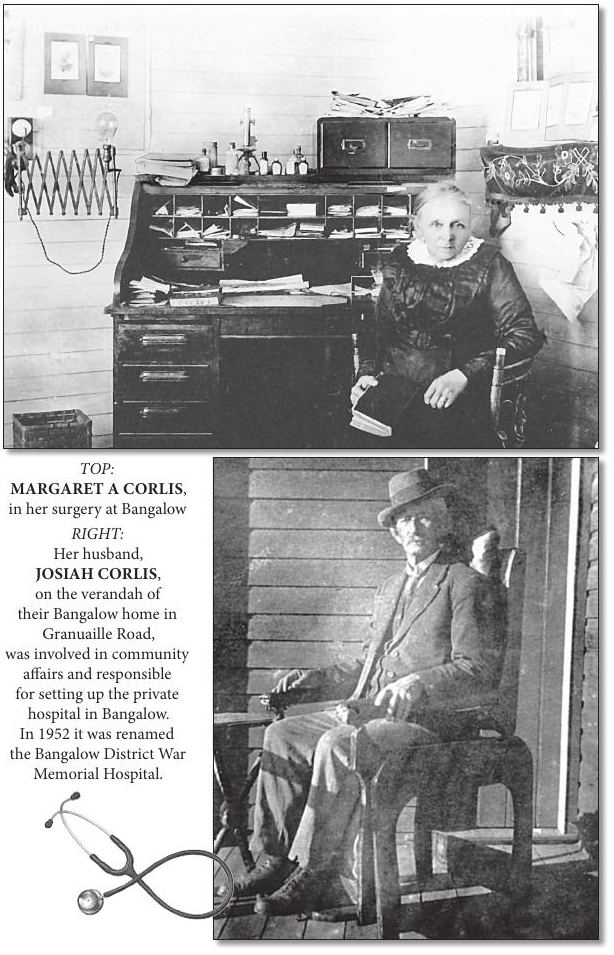
Husband and wife returned to the Richmond River region in 1904 to rejoin the two sons in Australia—Phillip Edwy Corlis, born in 1869 in Ontario, Canada, MD (Wooster University, Cleveland, USA 1892), and Charles Christopher Corlis, born in 1877 in Ontario, MD (Ohio Wesleyan Uni. 1898), were now practising registered doctors.
Some reports tell that from about 1905, Margaret practised in Maclean, Ballina, Byron Bay and Bangalow, but accurate logistic difficulties present with the parents now well into their sixties, the two sons being in very active practices and their Mum and Dad ever-ready to do locums for them to give them a break, as well as each doctor being referred to publicly simply as ‘Dr Corlis’. Drs Josiah and Margaret also appeared to care for their own patients while doing locum duties for other doctors in the area to allow them to have time away. Certainly, all the Corlis family members were prepared to travel to answer the call to help patients over a fairly large area of the North Coast.
From 1907, Dr Josiah, who initially lived and practised in a house in Granuaille Road, was also heavily involved in community affairs and was responsible for setting up the Byron Private Hospital (in Bangalow) in 1908, which also took in public patients from Bangalow and the surrounding district. He also founded the bowling club and was club champion. Over the years the private hospital was extended with finances from the community and the RSL and renamed the Bangalow District War Memorial Hospital in 1952. It was eventually taken over by the Health Department and closed soon after to inpatients in 1984.
It appears that Josiah and Margaret continued to practise in Bangalow, also consulting in Byron Bay from a house in Shirley Street from 1908 for quite some years, but in a reduced capacity when son Charles, affectionately known to his patients as ‘Doctor Charlie’, moved up from Ballina. Charles served as Medical Officer in the Army in France in World War I and was decorated with the Military Cross as well as being Mentioned in Despatches twice.
Dr Phillip, who had gone from Ballina to Casino, helped run the Bangalow practice while Dr Charles was at the war, and in 1917 was president of the bowling club. He was reported going to Queensland to look after his rural interests there soon after, but he returned to the North Coast, mainly around the Clarence region, dying in Sandgate, Queensland in 1949.
It is likely that Josiah and Margaret stopped active practice when Charles returned from the war. Josiah was recorded as filling in for doctors in Brisbane while they went to the war. He died in 1922 in Maclean, aged eighty-two and Margaret, who had suffered progressive blindness for quite some years, died in 1925 in Grafton, aged eighty-five. Charles continued to practise in Bangalow for many years, a very successful doctor and interstate bowler. He was still there in 1925 when Margaret died, but moved to Lismore in 1928, disposing of his practice to Dr J Broughton.
James H Chauncy
In July 1912, James Hornidge Chauncy, LRCP (Eng.), MRCS (Eng. 1856), having trained at St Thomas’ Hospital, London, took over from Dr Samuelson in Bangalow, after exchanging his Casino practice with him. He was recognised as a very genial and straightforward doctor, but he had moved from Casino to be nearer the sea, in the hope that it would improve the far from satisfactory state of health of his wife and children.
He went to seaside Byron Bay to see patients on occasions and then tried living there but his hopes apparently were not realised, and he left in about the middle of 1914. He may have gone direct to serve with the British forces in Malta, in 1920 starting practice in Brisbane.
Andrew J Bracken
Andrew John Bracken, LRCP and MRCS (Ireland), was in Bangalow in general practice in 1912. He had come to Australia in about 1907, having been born in Northern Ireland in 1882. He came from Sydney to Bangalow and was mentioned in the press when taken to court by the local Ford motor dealer for non-payment for a car, but he got a favourable verdict requiring him to pay two pounds. It seems that Dr Bracken started practice from ‘The Rivers’ house.
He sold to Dr Stewart in July 1912 and started practising in Waverley, Sydney, where he had the misfortune to father stillborn twins and lose his wife. He died at the age of fifty, having been in poor health for some time.
John MY Stewart
In July 1912, John Mitchell Young Stewart, MB, MS (Glasgow), succeeded Dr Bracken. Born in Glasgow, he had been in the Boer War as surgeon-major and then practised in Guildford (WA) before starting in Bangalow, which seemed to be a safe haven for a while before he was exposed in the Perth press in relation to his divorce. Dr Stewart had a motor bike for a time and visited Byron Bay twice a week. ‘The Rivers’ was also called ‘Dr Stewart’s Hospital in Bangalow’. Although the press referred to him as a ‘frail sawbones’, he left in about September 1914 after volunteering in WWI as a major in the Australian General Hospital and, despite being wounded in Gallipoli, he defied his alleged frailty by practising in Melbourne for many years after the war.
John GF Lentaigne
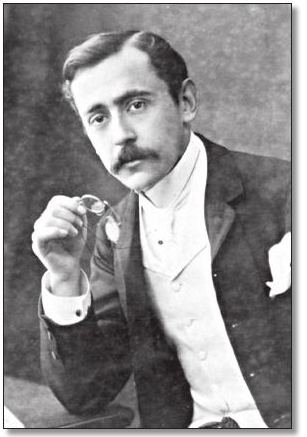
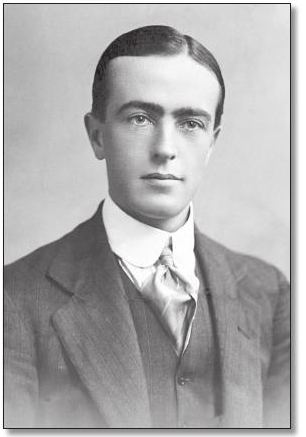
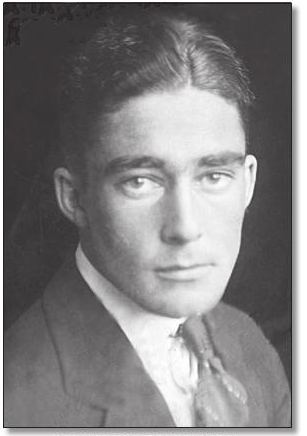
John Gerald Francis Lentaigne, MB, ChM (Sydney 1912), arrived in 1914. Born in 1886, son of a doctor in Hunters Hill, Sydney, he took over from Dr Stewart in 1914 to start practise from ‘The Rivers’, by the creek at the eastern end of Byron Street. He had been a Resident Medical Officer at St Vincent’s Hospital in 1912 and then did obstetric and paediatric training at Crown Street and RAHC. From 1915 he served in the Commonwealth Reserve Forces. ‘The Rivers’ was extended over the years and became his rooms and a private hospital charging in the early days two–three guineas per week.
He delivered many of the residents of Bangalow and Byron districts and he also gave anaesthetics, in addition to his full repertoire of GP skills. There was a severe epidemic of pneumonic flu in Bangalow in 1919 and he and the local nurses were very busy managing this in the hospital, and a large overflow of over one hundred patients under canvas cover at the showground. He also advised the town of Byron Bay, which had no doctor at the time, about planning for and managing the epidemic and liaised with the town’s nurses who had direct care of the patients.
He endeared himself even more to the people of the area by marrying a ‘local girl’, daughter of the town hotel owner and they had five daughters. Dr Lentaigne worked in very well with the next permanent doctor, Dr John Broughton, who did procedures in ‘The Rivers’. From 1936, Dr Lentaigne and Dr William Grey combined to give a very efficient and complete medical service to the area.
He was a great family man and very keen gardener and arborist. He was a keen lawn bowler, being president and club champion, and was an avid follower of surf carnivals, so it would be safe to say he had some sort of honorary medical association with the surf clubs. He also loved literature and history, and had a particular delight in growing dahlias. Dr Lentaigne held popular first aid classes regularly in Byron Bay and continued to practise in Bangalow until his death there in late 1952 at the age of sixty-six.
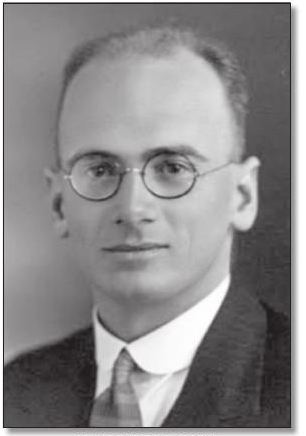
Milford G Wilson
In March 1928, Milford Graham Wilson, MB, ChM (Sydney 1926), started as a GP in Byron Street, Bangalow. In his time in Bangalow, he played serious golf and tennis but left for Sydney in May 1929, leaving for sale his seven-bedroom house in Byron Street.
John W Broughton
In 1928, John Walter Broughton, MB, ChM (Sydney 1923), took over Dr Charles Corlis’s practice in Bangalow from Byron Street and, after his marriage the following year, moved into the big house in Byron Street next to the funeral parlour. He was born in West Wyalong and went to Lismore High School where he passed the Leaving Certificate at the age of fifteen. His reward was to have to repeat final year at school because Sydney University would not let him start medicine at the age of fifteen years.
After doing his residency at Royal Prince Alfred Hospital in 1923–24, he went to Tuncurry, NSW before going back to the Far North Coast. He made a great impact on the townsfolk, especially the relatives of the young local boy, who had a remarkable recovery after operative treatment from the young doctor, for a severe open fracture of the skull after a horse accident.
In Bangalow, Dr Broughton was in the lodge and enjoyed tennis and golf, but was known to be very dedicated to his patients. He was very vocal in his criticism of unregistered doctors and developed an interest in urology, which took him to the United States, but he opted for rural medical life in Murwillumbah in 1936 and later in the Newcastle area.
William S Grey
William Scoboria Grey, MB, ChM (Sydney 1929), having worked in his father’s practice in Strathfield and then a couple of years in general practice in Auchenflower, Brisbane, started practising in Bangalow in 1936, in virtually all areas of medicine and surgery. For some years he was also the town dentist. He had a very busy practice and attracted a large number of patients from Byron Bay to his home surgery in Byron Street and at Byron Private Hospital (later Bangalow DWM Hospital). His surgical life was aided by anaesthetics given by Dr Lentaigne and after him by others, including Drs JG Opie and RW Gordon from Lismore and Dr LW Alderman from Mullumbimby.
Dr Grey was not a keen motorcar driver, preferring to cycle around the hilly town. He was a teetotaller, lay preacher and Sunday School superintendent in the Presbyterian Church. A good singer, he was otherwise a very quiet man, an overt pacifist, but very keen on sports such as tennis, table tennis, golf, bowls, archery and clay pigeon shooting. He was a great believer in coaching manuals, which explained his opponents’ admiration of his stylish techniques. The town ambulance driver called for him regularly to take him away from sporting events to an accident or the hospital.
Dr Grey was a follower of natural things such as controlled breathing in childbirth and hypnotism as therapeutic aids. He and Dr Lentaigne worked together very well and after Dr Lentaigne’s death in 1952, Dr Grey missed him his professional co-operation, becoming the only resident doctor in town for almost the next twenty years. Unfortunately, Dr Grey suffered a chronic debilitating medical condition in his later years and had to endure severe reduction in his clinical activities. He had to retire in 1971 and he died in 1975, aged seventy.
From 1952, when Dr Grey was on his own in the town, some medical attention for the residents was given by doctors based in Byron Bay, among them were Dr Alan James Stitz, MB, BS (Sydney 1952), in the early 1950s, and Dr Alan Bradshaw, MB, BS (QLD 1951), in the later 1950s.
When Dr Grey retired in 1971, Dr George Denholm, MB, ChB (St Andrew’s Uni. 1955), and his practice partner in Byron Bay, Dr Guy Ethell, MB, BS (QLD 1952), saw patients in sessional rooms in Byron Street two days a week and visited Bangalow Hospital to care for the townspeople. They were joined from 1973 by their colleague, Dr Peter Roger, MB, BS (Sydney 1970), DRCOG, and later by Dr David Reid, MB, BS (NSW 1974), DA, DRCOG. This service stopped in about 1976.
Ian C Elder
In 1974, Ian Carnegie Elder, MB, BS (Sydney 1968), DRCOG 1979, who was Resident Medical Officer at Grafton and Lismore Base Hospitals in 1968, set up across the road from Dr Grey’s old practice, later moving to George Street. He had been a Resident Medical Officer at St Margaret’s Hospital, Darlinghurst, before he became a Medical Officer in the RAAMC in 1969– 1973. He was very attentive to Dr Grey when he was quite debilitated and Dr Elder became a Visiting Medical Officer to Bangalow and Byron Bay Hospitals, having a branch practice in Byron Bay in the mid-seventies.
Dr Elder was a keen supporter of returned servicemen and was patron of Bangalow Soccer Club. In 1982, he left to practise in Gulargambone, NSW.
Carol A Brown
Carol Ann Brown, MB BS (UNSW 1979), took over Dr Elder’s practice, now in Granuaille Road, in 1982. This was later to become the Bangalow Medical Centre. She was very popular in both medical and community spheres, having a particular interest in the workings of Bangalow Hospital. Dr Brown expanded the medical practice over the next six years but she was fatally injured in a tragic car accident just outside the town in August 1988, a cause of much grief in the town.
David Smith
In 1984, David Smith, MB, BS (UNSW 1982), Dip Ven (Monash 1986), a Resident at the Lismore Base Hospital in 1983–84, joined Dr Brown in her practice. In typical Bangalow-doctor style, he was involved in the community, including being president of the very active Bangalow Bridge Club. His place in the group was taken over by Hilton Koppe, MB, BS (NSW 1982), Resident Medical Officer at Hornsby District Hospital in 1982–83, before being a happy graduate of the GP Training Program and later Jane Barker, MB, ChB (Cardiff, Wales 1973), MRCP Paed (Eng. 1976), joined the group, after practising for some years in Papua New Guinea. Her interesting introduction to Bangalow was when her vehicle broke down while touring the east coast and the instant attraction to the area led her to stay.
Judy Komaromi
In 1985, Judy Komaromi, MB, BS (UNSW 1982), started in Bangalow after doing a residency at Lismore Base Hospital. She worked with Dr Brown for a short time, then set up her own practice in Lismore Road for about three years, returning to Sydney and later on going to England.