Woodburn
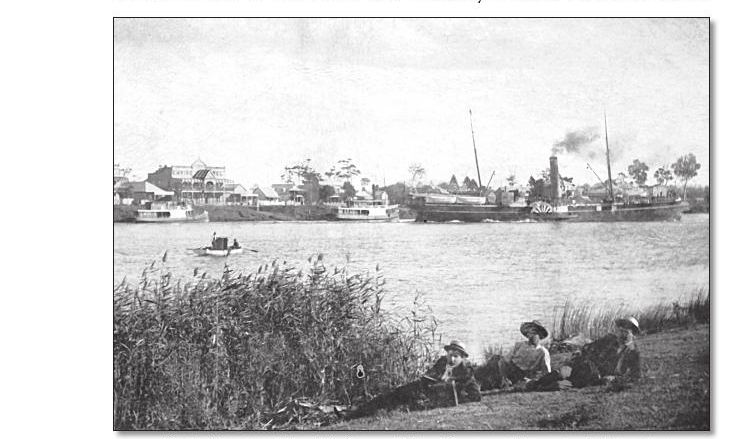
On the banks of the Richmond, thirty-four kilometres south of Lismore, Woodburn was initially a busy port settled from the 1840s.
Arthur W Power
In March 1885, Woodburn was reported to have secured the services of a ‘medical man’, Arthur Worsley Power, formerly of Port Macquarie. His claimed LFPS (Glasgow), with experience as Assistant Colon Surgeon was not accepted for registration and his previous jobs in Australia were Resident Dispenser at Royal Melbourne Hospital and Medical Officer at HM Gaol at Port Macquarie.
He advertised a complete dispensary service and extraction of teeth. He took part in civic meetings and was reported to have had land cleared near Bangalow by the original settler there. He practised in Woodburn until the end of 1886 and moved to Casino. (While he was in Woodburn, Dr Violette was in neighbouring Wardell.)
When ‘Dr Power’ left, Woodburn residents relied on medical attention from Coraki, Wardell and Lismore.
Silvio Monti
Silvio Monti, MD, ChD (Modena Uni.), worked from Broadwater from 1902 to 1937 and had an extensive following of patients in Woodburn.
John W Tarleton
John Willington Tarleton, MB (Sydney 1902), advertised the start of his practice in Woodburn in February 1919. The citizens celebrated his arrival, also lamenting that it had taken so long to get the village’s own doctor (in 1919, Dr Opie was in Coraki).
He had previously been in Nanango, Queensland, and from the end of 1920, he went to other rural parts of NSW—being reported in 1939 at the time of his death, as having practised in all states except WA.
Percy N Whitehead
Near the end of 1920, Percy Newell Whitehead, MB, BS (Melbourne 1915) started in general practice in Woodburn and stayed almost eighteen months. At his farewell gathering in March 1922, one speaker revealed the difficulties the doctor faced—prejudice against his apparent youth despite his large hospital experience previously in Victoria, and the problem of gaining the confidence of the citizens.
The chairman intimated that owing to the extremely healthy nature of the residents, the practice did not come up to expectations, with little support for the doctor and the lack of a hospital leaving him no opportunity for advancement. These factors were stated to be involved in the inability to find a successor to the doctor after he returned to Victoria.
James M Banks
James Matthew Banks, MB, BS (Sydney 1924), came from Sydney in October 1924 to reside and practise in Woodburn. He was a very accomplished golfer and very good tennis player in his spare time. He was a Honorary Medical Officer at Coraki Hospital for three years and in October 1927, moved to the larger medical and golf centre of Lismore, where he began a fairly adventurous life.
Thomas Acton
In October 1927, Thomas Acton, LRCP (Eng.), MRCS (Eng.), took over the mantle of Government Medical Officer at Woodburn discarded by Dr Banks. He had been Resident at St Bartholomew’s Hospital in London before working in Australia as medical superintendent at Burketown and Augathella Hospitals in Queensland.
He had bought the practice of Dr Alexander in Broadwater in July 1927 but soon moved to Woodburn. Dr Acton was in practice in the town for three years, despite not having access to Coraki Hospital. He stayed until July 1930, when he went to Goodooga, then Cumnock in NSW.
Norman A Walker
Norman Arthur Walker, MB (Sydney 1929), BS (Sydney 1930), was appointed to Coraki Hospital in September 1930, having his rooms in Woodburn. He was a keen gardener and exhibited in the local flower shows. He was in Woodburn for nearly four years, having participated with the locals in competition cricket and tennis.
Albert A Wearn
In May 1934, Albert Arthur Wearn, MB, BS (Sydney 1930), took over from his old medical school yearmate and ran the practice for a year until he left with plans to do studies overseas.
John P Barry
John Patrick Barry, MB, BS (Sydney 1930) was the third member of his year to take on the Woodburn practice by following Dr Wearn. He was a keen golfer and seems to have been in Coraki for three years.
Nicholas Kerkenezov
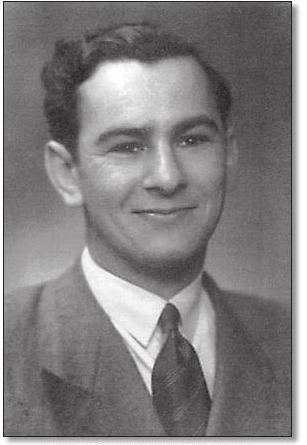
In 1947, Nicholas Kerkenezov, MB BS (Syd 1943), Resident Medical Officer at Dubbo Base Hospital in 1943–1944, started in general practice in Woodburn. Born in Australia of Bulgarian heritage, he had served as flight-lieutenant in the RAAF in WWII in 1944–46. He became typically resourceful in dealing with the inevitable floods in the area and avoiding the numerous brown snakes associated with them.
Apart from possessing great skill at angling, he was always interested in civic affairs and the running of the hospitals, starting off as Government Medical Officer of Woodburn and Honorary Medical Officer at Coraki Hospital. He developed a serious interest in the diseases of the eye and went in 1951 to start training in ophthalmology in the United Kingdom, returning with the DOMS (Dublin) 1951 and DO (Eng. 1951) to practise in Lismore for many years.
Desmond G Sisley
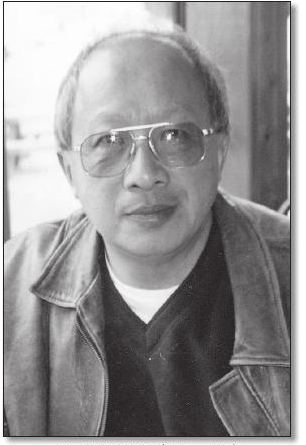
Desmond Gerald Sisley, MB, BS (Melb 1942), started in 1951 as a GP in Woodburn Road. He had been a Resident Medical Officer at Mooroopna Base Hospital, in Victoria in 1942–43, then served as captain in the AAMC in WWII in 1943–46, before working as District Medical Officer in the Coal Board in Cessnock, NSW. Dr Sisley moved on in 1954 and in 1957 was in Dungog (NSW).
Thomas C Wall
In September 1954, Thomas Charles Wall, MRCS (Eng.), LRCP (Eng. 1951), took over from Dr Sisley in Woodburn. He had been a Resident Medical Officer at St Mary’s Hospital in London and was a squadron leader in the RAF in WWII.
He practised for about two years in the town and later gave his address as Thailand and then Woollahra in Sydney.
Anthony I Graham
Anthony Ismay Graham, MB, BS (Eng. 1954), House Physician at West Suffolk General Hospital in 1954, House Surgeon at King George Hospital, Ilford in 1955 and Resident Medical Officer at City Maternity Hospital, Carlisle, England in 1956, commenced practice in Woodburn in February 1957. He had served, before his medical course, in WWII with the Black Watch in France and Germany in 1943–45 and with the Royal Ulster Rifles in Palestine in 1945–47.
It is not surprising that he seemed to live a full life outside his medical practice in the town, which he served until early 1964. He saw patients also in Coraki and Evans Head.
John RJ Glavina
In May 1964, John Robert Joseph Glavina, MB, BS (Durham), graduating in 1950 after serving in the Royal Navy in WWII, worked in Woodburn. He was appointed to the Campbell Hospital at Coraki and seems to have left in 1968.
After 1968, several doctors are recorded as being in practice in the town, but none seemed to stay more than a few months.
Olive T Lloyd
In 1974, Olive Tyndale Lloyd, MRCS (Eng.), LRCP (Eng. 1928), MA (Cambridge 1936), a graduate of Westminster Hospital Medical School, and therefore of fairly senior years when she died in Coraki while still in practice in Woodburn. She was probably there for two years, as her service was publicly appreciated by the hospital board.
Kenneth Chung
Kenneth Chung, MB, BS (Malaya 1972), Resident Medical Officer at Uni. Hospital, Kuala Lumpur in 1972–73 and then Medical Officer with the Health Ministry in KL in 1974–75, was in general practice in Woodburn in 1977, in River Street. He left in May 1979 and went to Tweed Heads.
Chanchal K Marik
In early 1979, Chanchal Kumar Marik, BSc (Calcutta University 1959), MB, BS (Calcutta 1965), FRCS (Edin. 1973), took over Dr Chung’s practice, as the result of an advertisement in the Medical Journal. He had vast experience in general and most other facets of surgery in England, including work in hospitals in Hastings, West Bromwich, East Birmingham, Middlesborough, North Ormsby, Doncaster and Hertfordshire over a period of ten years.
After sampling general practice in Bondi, Dr Marik arranged to start in Woodburn with re-opening of the theatre facilities at Campbell Hospital, so he was, with the aid of visiting anaesthetists, able to continue with his expertise in surgery on a regular basis until 1984, when the central administration decided to downgrade the Campbell Hospital again and he had to use the theatre facilities at Casino Hospital for his patients. At least, unlike his forbears, he did not have to make the journey by horse transport. He also did obstetrics until the unit was closed because of the minimum number of confinement rules.