Alstonville
On the plateau, thirteen kilometres inland from the coast at Ballina and nineteen kilometres from Lismore, Alstonville was settled from 1865 as a village called Duck Creek Mountain—a mixture of thick red mud and thick scrub.
William H Tomlins
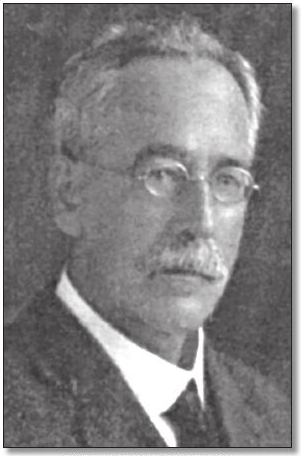
In 1904, William Henry Tomlins, MRCS, LRCP (Eng. 1884) was in Alstonville. He was born in London in 1858 and trained at University College Hospital, London. He came to Australia in 1885 and did locums in Sydney, Wallsend and Kempsey, NSW, before taking over the practice of Dr Violette in Wardell. He moved on to Ballina and then, probably wanting to reduce his heavy workload because of incipient indifferent health, went to Duck Creek Mountain and became a very active member of the community. He was never a robust man but he worked hard, not only in his medical practice, but he was a member of the lodge, lay preacher in the Anglican Church, in the Alstonville Agricultural Society, lecturer in first aid courses and active member of the Alstonville Progress Association.
Dr Tomlins was a serious gardener and botanist, honoured by having one of his favourite plants officially named after him—Eugenia tomlinsii. He was chairman of the committee to set up a School of Arts in the town and he was so dogged in pursuit of this project that, despite illness in the first half of 1909, requiring operative care in Lismore and then Sydney Hospital, he made it back as president for the opening of the newly-constructed building in May. His place was taken early in 1909 by Edmund Rupert Roseby, MB (Sydney 1900), MS (1902).
Dr Tomlins then continued on in Alstonville until 1917, when he went to Croydon Park in Sydney, finally spending his last years in Scotland, the climate of which was not kind to him and died in Glasgow in 1922. Dr Tomlins was remembered as a man of great integrity and generosity towards his poorer patients, working in wearing and sometimes dangerous conditions, all the while retaining his endearing personality.
Clifford Gearin
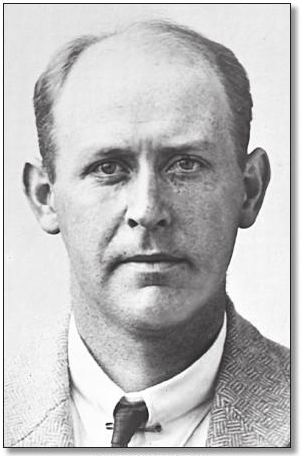
For more than two years there was no doctor resident in the village so medical attention was provided by doctors from Ballina, Lismore or Bangalow. Alstonville got through the pneumonic flu period without a resident local doctor and with few significant cases. However, a very popular man, Clifford Gearin, MB, ChM (Sydney 1915), had a practice in and was the Government Medical Officer in Ballina. He realised that Alstonville was under threat from the deadly epidemic and made visits to Alstonville to hold vaccination clinics and also arranged for ‘Sydney’ to allow him to isolate the village, at the shire border, from Lismore which was officially declared an ‘infected area’.
Cecil Bluett
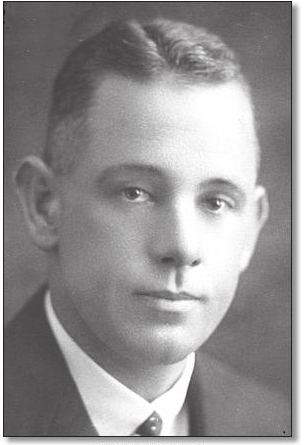
In November 1919, Dr Tomlins’ practice was started up again by Cecil Bluett, LMSSA (Eng. 1914), LRCP, MRCS (Eng. 1919). He was born in Tamworth, NSW, in 1889, and got a Diploma of Chemistry from Sydney University but he did his medical education and residency at St Thomas’ and The London Hospitals. He had served in WWI as Medical Officer Lieutenant in the Royal Army Medical Corps and was a member of the group called the Old Contemptibles, being awarded the Mons Star.
Dr Bluett celebrated his first anniversary in Alstonville in November 1920 with a miraculous escape from an accident in which his car, travelling at the breathtaking speed of twelve–fifteen miles per hour, suffered steering failure and crashed from a bridge, just near the butter factory, landing twenty feet below upside down on top of him and his child, pinning them in eighteen inches of water, with the doctor unconscious and in a ‘precarious’ condition with his injuries, the child suffering shock. They were rescued by passing motorists and the local constable, from the spot known later as ‘Bluetts Leap’.
From the outset, Dr Bluett began a long-term fight for the cause of returned service members, becoming president and then patron of the local and later the Lismore branches. He acted widely in support of many charities—Red Cross, Caledonian Society, lodge, and sporting associations, including bowls and rugby league.
He continued the presence of the local doctor on the committee of the School of Arts and agricultural society. He had no local hospital but from 1920 was Government Medical Officer for the area and a Visiting Medical Officer at Ballina Hospital, where he was a colleague of Dr WFS Yeates. He was also appointed Inspector of Cattle Slaughtering and Diseased Cattle and Meat.
At the beginning of 1928, Dr Bluett took six months off and, after being presented with a tobacco pouch, went to England and America, presumably to stimulate his interest in surgery. He left Dr Edwards as his locum, but on return moved on to Lismore with its hospital facilities and medical fraternity.
Alan F Smith
Following Dr Bluett in 1928 was Alan Frederick Smith, MB (Sydney 1926), who then started his professional life in the village. He lived in Alstonville but was appointed to Lismore District Hospital as a Visiting Physician, so he had access to good hospital facilities.
He was very involved in charitable, social and sporting activities, carrying on the tradition of the Alstonville doctor being a leading figure in the School of Arts, despite it being taken over by the RSL Club in 1933. Dr Smith was acknowledged as being a real gentleman, very kind to the needy people and the diggers and very proficient in cricket, tennis and bowls. He was farewelled in 1936 by a gathering of 300 people to whom he introduced his successor and then left to do postgraduate studies in England.
John L Dearberg
From mid-June 1929 to the end of January 1930, John Louis Dearberg, LRCP&S (Edin.) filled in for Dr Smith. He deserves mention because after only seven months in the village, he was held in such high esteem that he was given a public farewell and presented with a wallet of notes. He had enjoyed being in the community and playing golf before he left to work in Maitland and Moree, then eventually to Sydney where he died in 1944. He had served in the AIF in WWI.
Kenneth G Lawrance
Kenneth George Lawrance, MB (Sydney 1929), took over from Dr Smith in July 1936, having met him while doing a locum in Lismore for the previous twelve months. Dr Lawrance was very busy in Alstonville with his practice and was involved in local charities and organisations as well as joining the Visiting Medical Officer list at Lismore Base Hospital in 1938, which allowed him to deliver babies and operate on his Alstonville patients in that facility.
He was involved with the local volunteer defence group, both as a first aid tutor and drill instructor. He served in WWII as captain in the AIF from January 1943 until March 1946. Dr Lawrance provided Dr JM Skype from Lismore with locum work in Alstonville from 1943 until 1946. Towards the end of that year, Dr Lawrance started practising full-time in Lismore.
Joseph M Skype
Joseph Michael Skype, MB, BS (Sydney 1935) was born in Lismore and after being a Resident Medical Officer at St Vincent’s Hospital in Sydney in 1935–36 and at Newcastle Hospital in 1937, he did locum work in Goulburn, Ballina and Alstonville. He applied to the Lismore Base Hospital in 1941, being told there was no vacancy. He helped Dr Lawrance frequently in his practice while living in his home in Lismore, and also practising there until 1947 when he moved to do surgery in Sydney, dying at the age of fifty-four when a successful Macquarie Street specialist. He had served in WWII as medical officer in the AIF in New Guinea, suffering bouts of poor heath thereafter.
Gordon S Calnan
In 1947, Gordon Sylvester Calnan, MB (Hons) (Sydney 1946), BS (Sydney 1948), Resident Medical Officer at Mater Hospital, Newcastle, took on the role of the village medico. He had worked in insurance after school, but decided to become a medical student. After a year in Junee, NSW, he started his long career in the Richmond Valley as a GP, with expertise in GP surgery and obstetrics, for which he did have access to Lismore Base Hospital. In the absence of a pharmacy in Alstonville, he ran a dispensary from his rooms. He also visited Ballina Hospital and decided to move there in 1951. Dr Calnan was Honorary Medical Officer to the agricultural society, an esteemed post in which he continued for some years after he left the village.
John C McGill
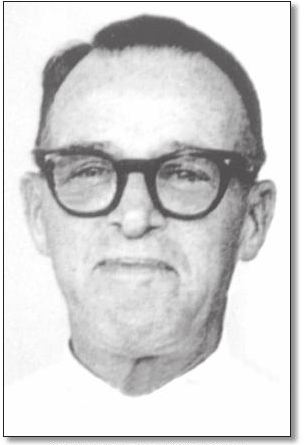
In 1952, John Charles McGill, MB, BS (Sydney 1951), FRACGP, DObst RCOG (1979) was the village doctor, having arranged to stay for twelve months. He was born in Maitland, NSW, in 1920, started as a schoolteacher and served in the 2nd AIF in WWII, before entry into medical school in 1944. He was appointed Visiting Medical Officer at Ballina Hospital and Lismore Base Hospital and carried out a full range of rural GP services for thirty-six years. As well as being the long-term patron of the agricultural society and a lot of other organisations, Dr McGill was a distinguished Rotarian. He was a perennial honoured guest and opener of a vast number of functions.
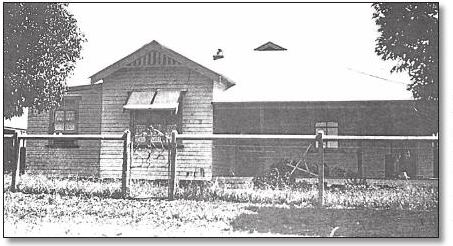
Affectionately known as ‘Mac’ or ‘Jake’, he practised on his own for over twenty years and eventually founded in the mid-1970s the ‘Alstonville Clinic’, which soon expanded from two doctors to keep pace with the great increase in the local population, due perhaps at least in part to the very good medical services in the area of the village. When looking for a new recruit to the practice, Dr McGill showed a flair for creative writing when describing the attributes of the position advertised, and not one new doctor was unhappy after being appointed. He was a regular attender and wise head at Lismore Base Hospital Medical Board meetings.
Doreen Keillar
Doreen Keillar (later Bacon), MB, ChB (Aberdeen Uni 1969), started work as assistant GP in Dr McGill’s practice on Australia Day 1972. Born in Dundee, Scotland, she did her residency in 1969–70 at the Royal Devon and Exeter Hospital, and typified many of the doctors migrating to Australia. With a view to living in a much more hospitable climate in a less-populated country, Dr Keillar took a job as Senior Resident Medical Officer in Maryborough Hospital (Queensland) in 1971.
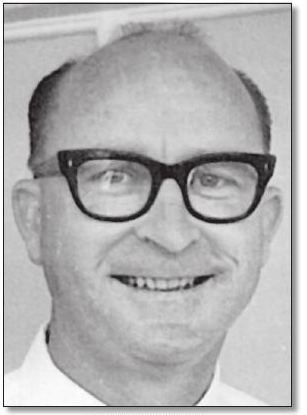
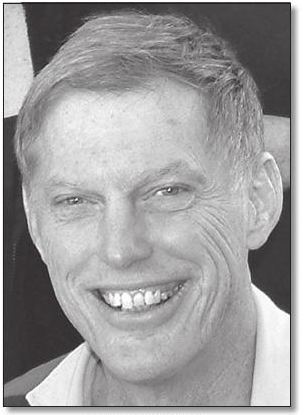
Then she answered an advertisement in the Medical Journal of Australia and arrived in Alstonville as its first lady doctor, working full-time for two years before starting her family, then part-time. She continued her lifelong horse-riding recreation as well as being a Brownie leader, playing tennis, serving on parent committees and gardening.
Later in 1974 she decided to work in Lismore, working initially as Registrar in the Psychiatric Department for the course of this record, but continuing to reside in and be involved in life in the village.
Paul S Earner
In 1974, Paul Sinclair Earner, MB, BS (QLD 1969), DObst RCOG, FRACGP, a Brisbane boy, joined in with Dr McGill after completing his residency, including obstetrics, at Royal Brisbane Hospital from 1969–73. He became a Visiting Medical Officer at Lismore Base Hospital and practised a broad range of rural medicine. Dr Earner was a very active member of committees of the local GPs and Lismore Base Hospital Medical Staff Council, his regular re-election to its leadership reflecting his calm and logical approach much appreciated by his colleagues, who were becoming quite numerous and vocal.
He was also an active member of the Alstonville community, a strong supporter of the Alstonville Anglican Church and a vigorous worker on Parents and Citizens Associations. He held popular community information sessions on general medical topics and children’s conditions.
Dr Earner sought respite from his busy practice life on his farm, which had a good view over the creek in which Dr Bluett spent a short time pinned under his car in 1920. Dr Earner was another very perceptive recruiter of staff for the Alstonville Clinic.
Hugh AD McCullagh
In December 1976, Hugh Andrew Douglas McCullagh, MB, BAO (Queen’s College, Belfast 1973), DObst RCOG (Eng. 1975), then Resident Medical Officer at Royal Victoria and Belfast City Hospitals in 1974–1975, joined the Alstonville Clinic. He arrived in Australia in 1975 and was introduced to Australian medicine at Bundaberg Hospital, Queensland, where he was the Registrar in Obstetrics and soon became Hospital Superintendent.
Dr McCullagh was a GP with special interest in obstetrics. He lived on his active farm and enjoyed regular rounds of golf.
Stephen J & Nicola M Foster
At the beginning of 1977, the husband and wife team who married as students, Stephen John Foster, MB, BS (Eng. 1973) from St Mary’s Medical School and whose father was a doctor, and Nicola Mary Foster, MB, BS (Eng. 1973) from Charing Cross Hospital, where she did an intern year, joined the Alstonville Clinic.
Born in England, both were keen scuba divers, who were attracted in 1974 to Rockhampton General Hospital in North Queensland for two years as Resident Medical Officers, then returning to England for a year to get some experience in obstetrics.
After a year in Perth at Princess Alexandra Children’s Hospital, they drove their Kombi overland, with one and a half children, to Alstonville. Dr Stephen was a full-time GP, and Dr Nicola was a busy part-time family practitioner and mother, with special interest in family planning. Both worked hard on their farm, which was almost self-sufficient, and retained their liking for camping and the beach. In 1981, they started up on their own as the ‘Alstonville Medical Centre’ and thus the village had two general practices for the first time.
John R Lemon
John Robert Lemon, MB, BS (QLD 1975) joined the Alstonville Clinic in 1981 as a GP, having done a GP trainee course with them but, after a couple of years, he moved to Sydney.
Nigel D Chamberlain
In 1984, Nigel David Chamberlain, MB, BS (NSW 1979), DCH (Otago, NZ, 1983), DObst RCOG (1985), who did his residency at Royal Canberra Hospital in 1979 and then worked in hospitals in Auckland, NZ for two years, joined the Drs Foster at the Alstonville Medical Centre.
Jimmy CM Chiu
Jimmy Chi Ming Chiu, BSc (Med.), MB, BS (QLD 1977), Dip RACOG, FACRRM, started as a GP at the Alstonville Clinic in mid-1985. Born in Hong Kong, he arrived in Australia in 1967. He was a Resident Medical Officer at Princess Alexandra Hospital in Brisbane in 1978–79, was in general practice in Hong Kong in 1980–82, Resident Medical Officer at Lismore Base Hospital in 1983 and then at Gosford District Hospital in 1983–85. His recreations were soccer, gymnastics and playing a hot guitar.