Introduction
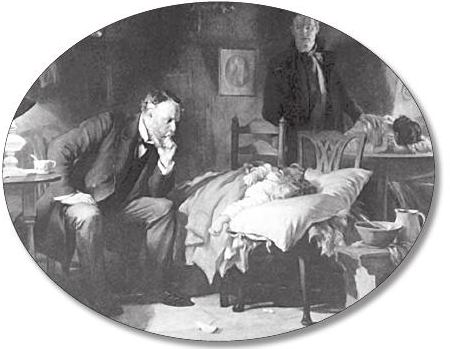
The doctors of the Richmond Valley region were for the first forty years almost exclusively immigrants, who had no experience of the extremes of climate and the primitive conditions of the bushland and the lack of lighting, sanitation and restrictions on travel. A lot of them came from privileged families—who paid highly for their school, medical and postgraduate education—to land, literally and socially, on the other side of the world.
Medical Education and Training
In the early days apprenticeship was common in the UK, but was phased out as qualifications from a university teaching hospital or a college were required by registration laws. In general, UK College diplomas cost less to obtain.
Up to 1884, the course for ‘the triple’ at Edinburgh and Glasgow Royal Colleges took three years. In London, the MRCS, LRCP course took four years up to 1908, and most US colleges took three years for the MD.
Melbourne University Medical School began lectures in 1863, Sydney started in 1883, Adelaide in 1885, Queensland in 1936, Western Australia in 1956 and the University of NSW in 1961.
In the 1890s the new Medical Bill required registering doctors to have a diploma from a recognised institution, a licentiate or membership of a Royal College or a university graduate medical degree. Naturally, many strange overseas qualifications appeared in Australia and unsuccessful registrants went overseas for a short time to return with a ‘postgraduate’ award from some obscure source.
In 1899 NSW was referred to as ‘that paradise of medical quacks, with still no Medical Act’.
Place of Practice
For many decades the surgery was usually in the doctor’s home, which needed to be large enough for the family quarters plus waiting room, consulting room and, usually, a treatment room. It was common practice for new solo doctors to consult in the local hotel to see if there were enough patients to justify the outlay required to start a new practice. Some took the offer of the local pharmacist to rent rooms in his building. As time went on, younger doctors took over the practice of a colleague who wanted to leave or retire. The system was that the intending successor would do a period as locum tenens or assistant, before both doctors (and patients) were happy with the final arrangements. This system led to uninvited new doctors (‘squatters’) being rare and unpopular with the local medical fraternity.
Transport
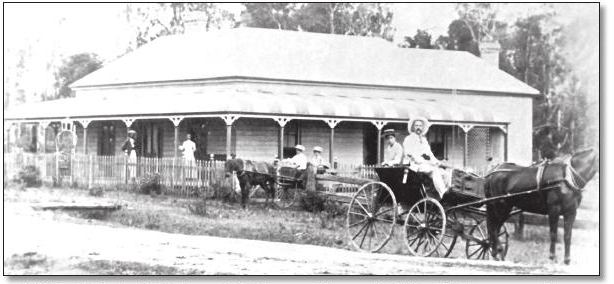
Initially by horseback, sulky, trap or occasionally a light dray. Some doctors had fine horses and carts, which they enthusiastically entered in the shows. Structured roads were few and mainly rough and boggy earth tracks requiring an eternity to travel anywhere out of town. Creeks and smaller rivers were traversed by rowing boat and larger ones had ferries or goods barges to get across.
Motorised buggies, carriages, cars and, even the odd motorcycle, began appearing after 1905 in the centres, but many doctors persevered with horse travel. A few used both, sometimes at the same time, which was not all that difficult with the initially severe ‘speed’ restrictions imposed by the local Inspector of Nuisances. Doctors’ cars tended be large because they doubled as ambulances. It also seems that the travelling Studebaker and Buick salesmen were pretty sharp talkers.
Ailments Treated
On the lighter side, arriving doctors had to contend mainly with patients who just felt ‘crook’ or ‘wonky’, terms the doctor would have never encountered in their homeland.
Respiratory infections were common, especially as there was a lot of smoking and drinking in the community. Measles and smallpox (varicella) occurred in epidemics and the government tried to keep up with smallpox vaccination, issuing lymph to selected doctors, but these were mainly in the river towns.
Whooping cough and diphtheria were rife and took up a lot of medical and nursing time—if the child survived. Bubonic plague was common in the ports, especially Ballina in 1900. The astute local GP did a great job to help control the plague thereafter.
In 1919 the whole area was caught up with the Spanish influenza outbreak, which had a high death rate in pockets and lasted for about a year, placing great physical and mental strain on the few doctors and particularly nursing staff, who bore the brunt of the management of this disease.
Snakebite was common and the only available treatment was local incision (presumably with Dad also ‘sucking’ out the venom) and giving strychnine for cases with convulsions.
Immersion and drowning were common, particularly because of the high number of non-swimmers in the community, constant heavy seas and frequent shipwrecks.
Infections were a problem for many years, both superficial and deep, complicating wounds and fractures. Appendicitis and peritonitis were routine and frequently resulted in death of people from all levels of the economic scale.
Perinatal complications had a high incidence in both mother and baby, often with poor outcome in the remote areas. Even later in life the children fared badly, national figures stating that in 1900–1910 one in ten children died before five years of age, particularly from enteritis. Fortunately, these figures fell markedly when general sanitation, healthy water supply and general living conditions improved.
Poisonings were widespread, not always self-administered. Domestic and social violence injuries were also encountered regularly with soft tissue and bony injury, gunshot and knife wounds.
Trauma was frequent with horse accidents and tree-felling misadventures resulting in fractured limbs and skull with brain and spinal injuries. Severe burns due to open fires were very difficult to manage, particularly in the pre-intravenous fluid and antibiotic times before the 1930–40s.
Analgesia and Anaesthesia
In general terms, pain reduction was provided in early times by freely-available rum and whisky. Mesmerism (hypnosis) was the only available reasonable adjunct. Gas anaesthetic was probably not available in the area until chloroform (with a dubious reputation) and ether, which was explosive, were tried well after the 1850s. As a result, it seems that the early surgeons had to rely on stoic patients, spirit analgesics, morphine and cocaine to do their operations. Early photos of other operating theatres do show numerous people holding the patient down on the table.
North Eastern Medical Association
As the numbers of doctors wanting to practise in the area increased, possible sources of unrest appeared because of proximity of neighbouring doctors, and those in one town finding the need to increase patient numbers by visiting other areas in which there was already a residing doctor. Patients, lodges and insurance companies were starting to make complaints about specific doctors.
In an attempt to have unity of the profession and a means of mediation with third parties, a meeting of the ‘medical profession practising on the Clarence, Richmond and Tweed Rivers’ was held on 18 April 1912 in Casino. Dr AF Parker from Lismore was elected president of the NEMA, covering the three areas and affiliated with the NSW Branch of the British Medical Association. The NEMA had functions including making and handling complaints against member doctors and having the power to admonish or expel the member concerned. The committee had control over dealing with lodges (which employed a doctor with its members’ fees).
The committee also was required to set a scale of recommended fees and travelling expenses. The NEMA had regular meetings of a social interactive nature, with a scientific session led by visiting expert guest speakers. This system seemed to promote harmony among the members and to function well as an intermediary in the inevitable disputes arising in the increasing medical population.
Day to Day Medical Practice
Patients were seen at their home, the scene of an accident, at the doctor’s home or rooms, at the private hospital and later on in the public hospital.
In the 1860s, iodine was in use and carbolic sprays later on, but antisepsis was a bit haphazard in the early days. Doctors’ rooms were inspected for cleanliness regularly by the local government-employed Inspector of Nuisances, who also doubled as the town traffic cop. In time, the doctors with busier practices employed nurses who reduced the clinical load on the doctor’s wife.
Doctors had a bag containing examination equipment, medications, surgical instruments and even lollies to soothe pacify young patients. In the early days, the instruments could be heard jangling in the saddle bags, particularly when the more capable riders jumped fences rather than using the gate.
The Richmond Valley doctors practised for sixty years without the aid of X-ray machines, which seems to put diagnosis and treatment of chest conditions and fractures of limbs, skull and spine, let alone operative retrieval of bullets from the brain and chest, beyond modern belief. The first X-ray machine in Lismore was 1925 and it was in a private hospital. The next one was in 1928 at Lismore Hospital and Kyogle in 1932.
There were no ambulance services for a long time, presumably requiring the doctor to go to the patient, resulting in sometimes prolonged absence of the doctor from his home town.
When public hospitals started, the facilities and instruments were pretty basic, nursing staff were few—although dedicated and very well trained— and antipathy towards the doctors from some members of the hospital committee (board), who were local well-meaning professionals in the town with no medical knowledge, but with considerable administrative power entrusted in them, led from time to time to disharmony in the hospitals. On occasions, the doctor(s) involved in this unpleasant situation had no alternative to reluctant resignation, which excluded their own patients from their favourite doctor’s care.
In 1929, the Richmond area was involved, as the rest of Australia, in the Great Depression, which affected the livelihood of everyone—with gross unemployment at all levels, so that by 1932 a third of the population were unable to find work. Slow recovery started then but there was a great retardation of progress in development of medical resources in rural areas such as the Richmond Valley.
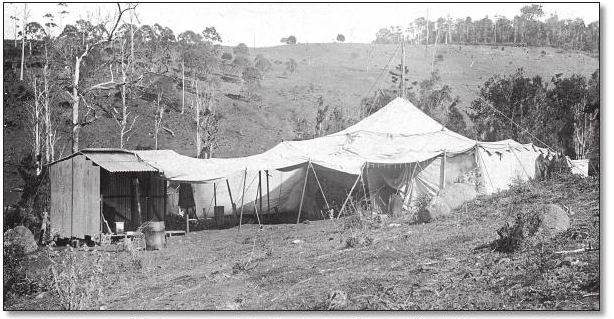
The only other negatives were professional isolation, both medically and socially, and difficulty in having a holiday because of lack of locums. Some of those in the bigger centres seemed to have good contacts with recent graduates from the city who, even in those days, jumped at the chance to spend a couple of weeks in warmer climes with a paid for trip on a steamer, particularly if it was the rather luxurious SS Tomki, which was a regular visitor to the Richmond River ports.
The good side was the availability of many clubs, societies and other gatherings for both the doctors and their wives to engage in, as well as church and charity activities, which probably helped to gain the high level of respect they had in the community.
Sawbones, Saddle Burns & Soothing Balms
The explanation of the title of the book is that ‘Sawbones’ is a mid-19th century word used to refer in either derogatory or respectful terms to a doctor with both medical and surgical abilities. ‘Saddle Burns’ refers to the effects of long hours spent by the pioneer doctors in reaching their patients on horseback and use of ‘Soothing Balms’ was the only appropriate relief of physical discomfort and fatigue, resulting from their missions, to leave the doctors with a clear head when inevitably called out again.