Coraki
Coraki township, situated on the Richmond River, was settled in 1849, having been part of the land where clearing of the heavy scrub started. It was a busy river port and ship-building centre, as well serving as a gateway to the northern and inland areas. The circumstances in the area at the time were described as the population being sparse and widely separated, in the main impecunious, so the doctor’s routine involved a lot of time spent travelling in between calls and with little, or no, financial reward. In the early days some in the communities, particularly the farmers and millers, guaranteed a minimum stipend to try and attract a doctor, who usually was just starting in the profession and even in a new country, and properly described as ‘skint’. Because there were no public hospitals in the pioneering days, the doctor had to provide his own instruments, so starting up in medical life in a rural town would have been pretty daunting, as many well-meaning young lonely aspiring medicos found, before they had no alternative to ‘moving on’ to a more promising place, which usually meant a town already with another doctor to provide company.
Arthur F Parker
In 1878, Arthur Frederick Parker, LSA (Eng. 1876), MRCS (Eng. 1876), with a MD (Brussels 1885), was the first recorded doctor living and practising in Coraki. He was born in England in 1851 and worked as Resident Surgical Officer in Bristol General Hospital before sailing to Australia soon after. He practised as a physician and surgeon but as Coraki did not have any reasonable hospital at the time, he left for Lismore where he was established in 1880.
Matthew Knox
In the early 1880s, the name of Dr Matthew Knox was mentioned in the Coraki–Woodburn area but apart from his having been an American with a MD, the only other information on him is that he was sixty-eight when he died in Coraki in 1885 from ‘heart disease’.
Francis G Connor
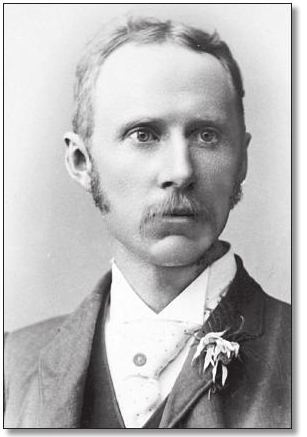
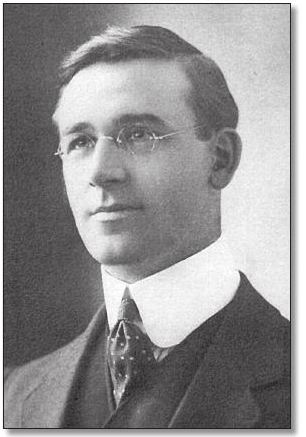
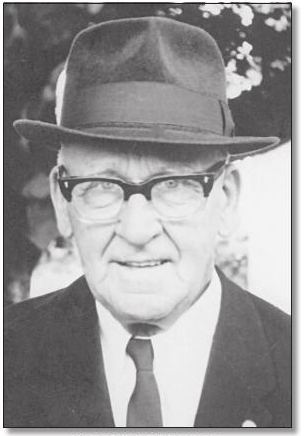
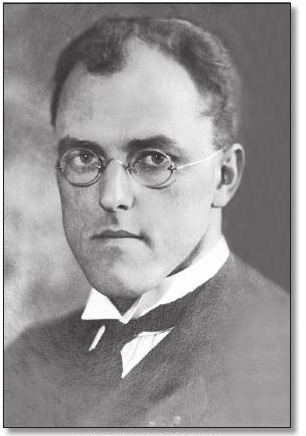
Francis Gillies Connor, MB, ChM (Edin. 1883), advertised commencement of practice in Coraki in June 1886. (Dr William Bradbury Violette, a Glasgow graduate, was in nearby Wardell.) Born in 1861 at Swan Creek, on the Clarence, he and his brother were taken by their mother to Edinburgh for their university education. Dr Connor had a look at the Richmond area in 1886 and the columnist for the local paper advised him to try the Tweed River. Fortunately for the area, the unkind advice was ignored and Dr Connor advertised that he could be consulted daily at Mobbs’ Hotel in Coraki and once a week in both South Woodburn and Casino at the local hotel.
He proved to be very popular because of his genial manner and the uniform attention given to his patients. He was Medical Officer for the Oddfellows’ Lodge, active in the Coraki Debating Society, on the committee of the School of Arts and the Progress Association, president of the Coraki Cricket Club and played in the town tennis team. However, his busy duties in his extensive solo practice over a large area, and the time spent travelling by horse in rough country in the wet climate over four years, had a prejudicial effect on his health and Dr Connor decided a change was absolutely necessary.
He had suffered the death of his seven-week-old son the year before. A banquet held in his honour was even spoilt by the rain making the local roads impassable. His leaving was predicted to be a source of universal regret and described as a calamity. Dr Connor sold his practice to Dr JA Langdon, who had been in Casino, and in 1890 he moved to Lismore, where there were better medical facilities and other doctors. He took over from Dr AF Parker (formerly of Coraki), who went to further his studies in the UK and Europe.
John A Langdon
In January 1890, John Arthur Langdon, LRCP (Edin.), LFPS (Glasgow 1874), took over the practice of Dr Connor in Coraki. He had been a surgeon in the British and Turkish Armies, surgeon in the Western and Brazil Telegraph Company, and Naval Medical Officer, which he claimed gave him great experience in dealing with gunshot wounds and smallpox, so that he was able to get paid work as a Public Vaccinator. Dr Langdon worked from Western Australia to Cairns and was an open critic of the administrators, at one stage being arrested for slander of a prominent citizen. He left Casino for Coraki and soon engaged in exposing publicly in Coraki, at his own legal cost, ‘Doctor’ R Royston-Russell. The document associated with this exposure revealed that Dr Langdon had a most wonderful command of the English language with emphasis on vitriol and descriptive terms.
He did not endear himself to local society by saying that the community of Coraki was mainly composed of illiterate Irish and that, judiciously handled, more gullible people did not exist. Dr Langdon himself left after about a year of full-time practise in Coraki and headed for Sydney and continued his travelling doctor life, leaving the town without a doctor.
R Royston-Russell
The infamous unregistered R Royston-Russell, was in Coraki in 1890. He had many aliases and bogus qualifications. Helping in the prison dispensary in the tough Berrima Gaol, where he had been an inmate was the closest contact Russell had had with anything medical. He was described as an accomplished swindler with bandit proclivities. To show what a small world it was, he duped the worldly-wise Dr Bernstein, who invited him to give a second opinion on a very ill patient in Lismore. Worse still, later he had tried to defraud the revered Drs Josiah and Margaret Corlis of their practice in Bellingen. Russell left in a hurry and started all over again in Western Australia.
Bernard McDonogh
In 1892, Bernard McDonogh, LRCP, LRCS (Edin. 1886), LFPS (Glasgow 1886), was in Coraki (population 550), following Dr Langdon. He was a Scot with a great interest in horses and an accomplished horseman. He was very busy around the area and reports show that he operated on patients with Dr William B Walton in Coraki Hospital. His neighbouring colleague from Woodburn, Dr Silvio Monti, was cared for by Dr McDonogh in 1903 after being found unconscious by the roadside ten miles from town after his sulky overturned on the way back from an urgent call, so indications are that the doctors lived in a state of friendly harmony. He was very interested in agriculture and sponsored a prize at the local show.
Dr McDonogh was in town until 1911 and went to Melbourne, dying in 1913 in Toorak from the effects of prussic acid. During his time in Coraki, Dr Augustus William McDonogh was in the Byron Bay area, but any direct relationship is not known.
Percy B Stewart
Percy B Stewart, MB, BS (Melbourne 1900), practised in Coraki in 1901. He moved on to Casino after about a year, becoming a very popular figure in that town.
William B Walton
In April 1903, William Bain Walton, MB, ChM (Sydney 1898), previously Resident Medical Officer at Royal Prince Alfred Hospital and the Children’s Hospital in Camperdown, arrived in Coraki by steamer. He had worked as Locum Government Medical Officer in Darwin, Queensland and then Burraga (in Central Western NSW). He set up in Minto Street and during his time in the town, he literally co-operated with Dr McDonogh. He also showed interest in the Central Richmond Agricultural Society and sponsored prizes. Both doctors were appointed in 1904 as Medical Officers at the inaugural meeting of the Coraki Hospital Committee. He was recorded doing calls to Swan Bay and even Byron Bay.
In August 1905, Dr Walton had to resign from the hospital and his position of Medical Officer to the Oddfellows’ Lodge at Coraki on account of ill-health and passed on his practice to Dr F Wendler. Dr Walton planned to go south and in 1907 was in Uralla.
Friedrich Wendler
Friedrich Wendler, MD (Griefswald Uni., Germany 1904), State Exam Cert. (Griefswald 1904), continued Dr Walton’s practice in Coraki in August 1905. He arrived in Australia by ship from Europe in February 1905, but stayed about a year and by 1907 was in Mundawaddera, NSW.
Arthur J Cahill
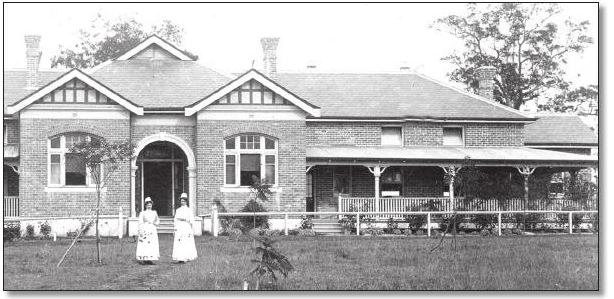
In March 1908, Arthur James Cahill, MB (Melbourne 1903), ChB (1904), was practising in Coraki in Minto Street, having been offered a position by the lodges and the hospital. Born in Bendigo in 1881, he came from working in Kyneton, Victoria and soon settled into Coraki life as a doctor with surgical skills. When he started in the town, he worked well with Dr McDonogh at Campbell Hospital.
He was an accomplished baritone and choral and musical conductor who established a choral society and philharmonic society in Coraki and Lismore. He had the Cahill Gold Medal struck for the champion lady soloist at the Lismore Music Festival, which he founded with the help of Dr Humphery. He even conducted the top-class Woodburn Choir which was in great demand throughout the region and started the Coraki Philharmonic Ball. In 1909, Dr AJ Opie, three years behind Dr Cahill at medical school, arrived by train and Cobb & Co coach to do a locum for him, and was instantly popular with the townspeople, so he was the logical choice to take over the practice when Dr Cahill decided to leave in March 1911 to pursue other interests in the United Kingdom, including seeing the Coronation.
He went to Lismore on his return one year later after studying surgery of the eye, ear, nose and throat, to start a practice in that specialty. He retained his very close friendship with Dr Opie, who had similar musical and vocal interests. Eventually, he went to Canberra, which had become a significant growing administrative and cultural centre and had no eye, ear, nose and throat specialist.
Archelaus J Opie
Archelaus James Opie, MB, ChM (Melbourne 1906), Resident Medical Officer at The Melbourne Hospital until 1909, took over Dr Cahill’s practice in March 1911, when the population of Coraki was the same as Lismore and slightly less than Casino. He was born in Bendigo in 1883 and had played Australian Rules for Carlton. The other doctors in the area were much older and fixed in their ways. He had practised for a time in Kapunda in South Australia and Devonport in Tasmania and was a very accomplished musician and singer, thus following the pattern Dr Cahill had set. Dr Opie was a keen swimmer, loved the beach, bowls, golf and tennis, for which he went to Sydney for the annual Country Week Tournament.
He was a Visiting Medical Officer and Superintendent at the hospital, with a leaning towards surgery and obstetrics. He ministered during the pneumonic flu epidemic in 1919, no loss of life being recorded in the area. His other commitments were the Music Festival Society, lodge, Rotary and the local medical association. In 1923, he returned to Melbourne for postgraduate study for a year and then he moved on to Lismore at the end of the year after a large farewell gathering attended by the mayor, one Mr Lou Benaud (a schoolteacher who taught his own son to play cricket very well).
John W Tarleton
Early in 1918, John Willington Tarleton, MB (Sydney 1902), advertised his presence in Coraki. He was a doctor who practised in all states of Australia except WA, and also Hong Kong and Shanghai. Dr Opie was in Coraki and it is unlikely that there was much work for another doctor in town. After a short time, he was off to the southern states, finding his way to Swansea, Tasmania.
Stuart Fraser
Stuart Fraser, MB, BS (Melbourne 1922) actually started to practise in Coraki in 1923 and was appointed Honorary Medical Officer to the hospital. He made a generous donation to the hospital for surgical instruments, but did not stay for very long to make use of them. He began in July and left in November to start a very distinguished career as an eye specialist in Melbourne—not bad in those days for a boy born in Clunes.
John R Allison
In 1924, John Robson Allison, MB (Sydney 1921), was in Coraki before Dr Opie went off to Melbourne. He was born in Drake in 1897 and had relatives in Coraki. He became the Government Medical Officer and Medical Superintendent of the hospital. Dr Allison was involved in the School of Arts, in the tennis club and, as a keen golfer, was on the committee for the formation of the local golf club. He was responsible for the introduction of the X-ray plant into Coraki, thus making a great contribution to patient care in the area. Dengue fever was rife in 1926, and he and his wife were fortunate survivors of an attack.
Dr Allison was a generous donor to the hospital and was given a well-attended farewell in 1927, after which he headed for Campsie in Sydney, having arranged for a replacement, Dr WC Smith.
Hugh AC Wall
Also in 1924, Hugh Alton Chandos Wall, MB (Sydney 1915), born in Sydney 1893, was in rooms in Martin Street in Coraki, which then had two doctors again for about eleven years. He had been a school doctor with the Education Department in Nimbin from 1921. He arrived in time to get dengue fever, too, but recovered. In WWI, he was lieutenant in the RAMC and also the RAN. On the honorary staff at the hospital, he became the Government Medical Officer after Dr Allison. He was a keen golfer, member of the bowling club and had an intensive involvement in civic affairs, being on the Coraki Municipal Council for five years. He married a Coraki girl and worked in the area for twenty-six years as well as having to endure the war years and the Depression. Dr Wall died while still practising in Coraki in 1950.
William C Smith
William Cletus Smith, MB, ChM (Sydney 1925), Resident Medical Officer at RPAH, Camperdown in 1925–26 and The Coast Hospital, Little Bay in 1926–27, started to practise in the middle of 1927 in Minto Street, in place of Dr Allison. He served in the Great War before doing medicine. He became Medical Superintendent of the Campbell Hospital and was active in local activities, including terms as president of the RSL Association, was a keen proficient member of the golf club and foundation member of the bowling club. Dr Smith left in late November, 1935 to go to do further surgical training in Scunthorpe, England for two years before setting up practice in Murwillumbah, NSW.
Bruce C Terrey
In 1936, Bruce Corbett Terrey, MB, BS (Sydney 1933), Resident Medical Officer at Royal North Shore Hospital, Sydney was in Coraki. He was a keen golfer and cricketer, but also enjoyed bridge and playing the piano. He was a prominent member of the local branch of the British Medical Association, which was reborn as the North Eastern Medical Association, of which he became president. Dr Terrey was in Coraki until early 1948 when he returned to Sydney to practise in Beecroft.
Peter W Leslie
Peter William Leslie, MB, BS (Adelaide 1943), started in practice in Coraki in February 1948 but from 1950 he was alone in Coraki. By 1954, he was in Toowoomba, Queensland.
John R Roper
In October 1954, John Ramsay Roper, MB, BS (Sydney 1950), then Resident Medical Officer at St George Hospital, Sydney in 1950, started his practice in Coraki and was appointed Honorary Medical Officer to the hospital. He had previously been working as a GP in Woollahra in Sydney. By 1960, Dr Roper was in Ipswich, Queensland.
Ronald V Pratt
Ronald Victor Pratt, MB, BS (Melbourne 1941), MFARACS (1952), Resident Medical Officer at the Royal Melbourne Hospital in 1941–42, was listed as practising in Coraki in August 1957. He had been in the AAMC in WWII, honorary anaesthetist at Royal Perth Hospital in 1947–52 and in 1954 was in Madang, New Guinea. He stayed for just over two years and in 1960 was in Chatswood, Sydney.
David Carden
David Carden, MB, BS (Adelaide 1953), was in practice in Coraki in October 1959. He had served in WWII in the RAAF, 1943–46, and was previously a GP in Goroke, Victoria. He was Honorary Medical Officer at the Campbell Hospital and was the only doctor in the town for many years, although Dr D Ryan was in Evans Head. Dr Carden was a very hard-working GP, adept in all facets of rural practice and, although he had short breaks with the help of locum doctors happy to have a change in the country, he started to suffer indifferent health and in 1984 retired to Brunswick Heads after a rousing send-off by locals.
Peter J Ulrick
In 1984, Peter James Ulrick, MB, BS (NSW 1978), took over from Dr Carden in Coraki in the general practice, wanting to work on the North Coast where his wife came from. He had been a Resident Medical Officer at Royal North Shore Hospital, Sydney in 1978–79, Registrar at Royal Hobart Hospital in 1980, at Prince of Wales–Prince Henry group and St George Hospital in 1981, before doing locum work in the UK, probably where he developed a lasting interest in old houses and antiques.