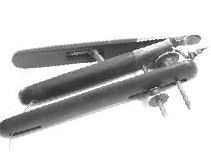
Kyogle
New settlement of the northern inland area of Kyogle began in 1840 with a few farms, and in 1901 the population was recorded as fifty-one.
Edmund B Loughnan
The first recorded doctor resident in Kyogle was Edmund Brennan Loughnan, LMRCS (Ireland), LKQCP (Ireland), who arrived at the beginning of 1905. He was born in 1841 and educated in Ireland, arriving in Australia in 1879 and then working in Coolah, Coonabarabran and Collarenebri areas in NSW for twenty-five years.
He was involved in the local school board, the jockey club, his local church council and the lodge. His stay in Kyogle was about two years, but he was sixty-two when he arrived and by the end of 1907 he had retired to South Woodburn, and perished soon after being in Coraki Hospital with an ‘internal ailment’. Before and after Dr Loughnan, records indicate that medical attention for residents of Kyogle was provided in Casino with the occasional visit from a doctor from Casino, particularly Dr AH Rutherford, who continued to visit Kyogle after there was a resident doctor, often to assist with operations.
William W Greer
In September 1906, William Wells Greer, MB, BCh (Edin. 1904), was in Kyogle, being extremely well qualified. He was born in Chester, England, in 1876, came to Queensland as a boy and was educated in Townsville (initially by his father) and Brisbane. He went over to Edinburgh University to study medicine, was Resident Physician at Edinburgh Royal Infirmary in 1905 and then got his MD (Edin.) in 1906. His family home was in Southport and he arranged to set up a general practice in Kyogle, initially in the old house of Edmund Loughnan.
This well-organised young doctor went back to Scotland in July 1907, married a lady from Glasgow and returned to Kyogle, where over the next two years, he built a new, finely-furnished house, joined the Progress Association as secretary, became president of the tennis club, attended boxing association events, joined the Caledonian Society and the agricultural society, attended lodge, handled a severe outbreak of diphtheria as the only doctor in the area and established and held, with ‘much éclat’, a public opening of Dr Greer’s Private Hospital.
From 1908, he was keen to have another doctor in town and he started to show ponies in the local shows. In February 1909, he survived the capsizing of his sulky—an occupational hazard of the times—putting his wife in hospital for a while. In February 1913, he was given a valedictory dinner in Kyogle and in his farewell speech referred to some of the difficulties with practice in ‘this country’ with the people being different from the more servile people ‘at home’, even wanting to know all about their child’s illness and whether it was dangerous. He expressed real difficulty with the matter of charging for his services.
At the age of thirty-seven, he took his wife back ‘home’ for a tour of Scotland and England, picked up the FRCS (Edin.) in 1914, then joined the (British) Lowland Field Ambulance as Medical Officer and went to Egypt, Gallipoli, Sinai, Palestine and France. He was Mentioned in Despatches three times and awarded the Military Cross in the Battle for Gaza. He was gassed badly in the trenches, then he returned to Australia and started to practise in Southport, making his final trip ‘back home’ in 1924 and working in Bedfont, Middlesex, where he died in 1933.
His obituary in the British Medical Journal recognised him as having a great intellect combined with rare imagination and practical attitude to life—instead of continuing his bright academic career, following ‘his destiny to the highways and byways of a country in which distances were great and where many bricks had to be made of straw’.
Harold S Thomas
Harold Skarratt Thomas, MRCS, LRCP (Eng. 1908), was established in Kyogle in 1910. He was involved in many community activities, being secretary of the rifle club, member of the agricultural society, on the School of Arts Committee and vice-president of the rugby union club. In March 1913, one month after Dr Greer left, he disposed of his practice to Dr WB Clipsham. He went to practise in Granville in western Sydney.
Thomas CC Evans
In November 1912, Thomas Charles Cann Evans, MB, ChB (Eng.), was practising in Kyogle. He had graduated from St Mary’s Hospital, then trained as Medical Officer at Fulham Infirmary and as Assistant in Anaesthetics, Casualty and Ophthalmology at St Mary’s. Dr Greer left early in 1913 and Dr Evans was joined from England by his father in the middle of that year.
He practised initially from his house in Geneva Street and soon became the Government Medical Officer for Kyogle, joined the Anglican Parish Council, showed ponies and was involved in horse racing. He was very busy with the great demand for vaccinations for smallpox. In 1915 he volunteered as Medical Officer for the AAMC in Brisbane but within days he was on the ship overseas.
He resumed in Kyogle and in 1919 he married an English lady well worthy of mention, as she had graduated from art school in London and Exeter, then chose to become a VAD (volunteer nurse) during WWI. On arrival at Kyogle, she did not follow the accepted role of rural doctor’s wife and, under the name of Joyce Dennys, embarked on a very successful career as a painter and illustrator, initially with the Bulletin and Home magazines, then internationally, with her many works exhibited widely. Her stay in Kyogle had no adverse effect on her constitution as she lived for ninety-eight years.
The Kyogle area fared badly in the pneumonic flu epidemic in 1919, and at one stage Dr Evans had 123 cases in Stony Gully. In November 1913, he received national acclaim because of his dogged efforts to get the council to adopt basic covering measures with all tanks, drains and loose water in the area to eradicate mosquitos from Kyogle, which was considered one of the worst sufferers from the pests of all towns in NSW. In October 1924, Dr Evans sold his practice to Dr JT Jones, who had been in Kyogle for some time, and went back to England.
Thomas GC Evans
Thomas George Cann Evans, MRCS (Eng. 1881), LRCP (Edin. 1882), LMRCP (Edin. 1882), late Medical Officer at Budleigh Salterton Hospital, Devonshire and Exeter Hospital joined his son in Kyogle in 1913 and within four months had to have his appendix removed, being close to sixty years old. He was on the Kyogle Jockey Club Committee and presumably carried on the practice in Kyogle on his own while his son was away at the war.
William B Clipsham
In March 1913, Sydney-born William Brookes Clipsham, MB (Sydney 1910), ChM (Sydney 1926), was in practice in Kyogle. He had been a Resident Medical Officer at RPAH, Sydney 1911 and spent one year in Many Peaks, Queensland, before taking over from Dr Thomas. His son was born in Kyogle Private Hospital in July 1914 and records show that in 1919 he sold the practice to Dr Jones and went to Grafton. He did postgraduate courses, including the DOMS (Ophthalmology) in London and in 1928 was in Dubbo.
John T Jones
John Thomas Jones, MB (Sydney 1915), was in Kyogle in 1919, succeeding Dr Clipsham. He settled into the town and went to Country Week Bowls with the town team. In October 1924 he took over the Evans practice and also the fight to get an X-ray machine for the hospital against great central official resistance. The first patient was admitted to the new Kyogle Memorial Hospital in May 1925 and Dr Jones and Dr Little were appointed Medical Officers.
Dr Jones became Hospital Superintendent and was still in Kyogle in November 1932 when the X-ray machine came into use. Unfortunately, his wife died and soon after, in November 1933, he left the area and in 1940 was in Bundanoon, NSW.
Dudley W Little
In 1925, Dudley William Little, MB, ChM (Sydney 1921), was practising in Kyogle. He had been a Resident Medical Officer at Sydney Hospital in 1921–22, Resident Medical Officer at RAHC, Camperdown in 1922–23 and Resident Medical Officer at St Margaret’s Hospital for Women, Darlinghurst in 1923. Dr Little and Dr Jones were appointed as Medical Officers to the newly-opened Kyogle Memorial Hospital. He returned in 1926 to Sydney to study for the Diploma of Public Health and became an Honorary Surgeon at St Joseph’s Hospital, Auburn, Sydney. He was replaced by Dr Lewis.
Arthur R Lewis
Arthur Raymond Lewis, MB, ChM (Sydney 1924), came to Kyogle in 1926 after doing his residency at RPAH, Camperdown in 1924–25. His wedding announcement in the Sydney Morning Herald in 1926 reported that his honeymoon was to be spent touring the Northern Rivers and seems to explain how he came to be in Kyogle, which was down to one doctor. He succeeded Dr Little and he also took over the ‘Evans’ house. He became the area Government Medical Officer and started a thirty-five-year term as Superintendent of the hospital, an honorary position requiring a lot of time in addition to his own practice which itself involved frequent use of his renowned surgical prowess.
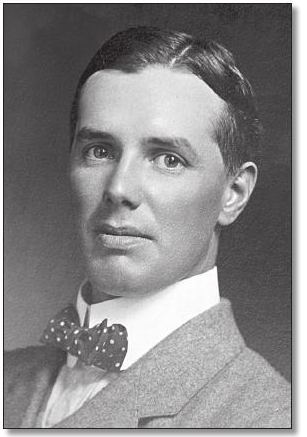
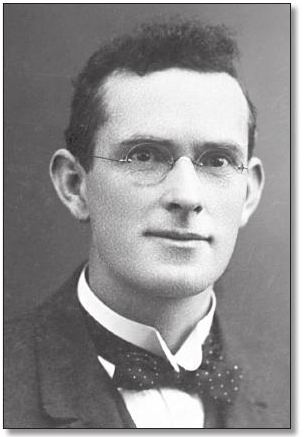
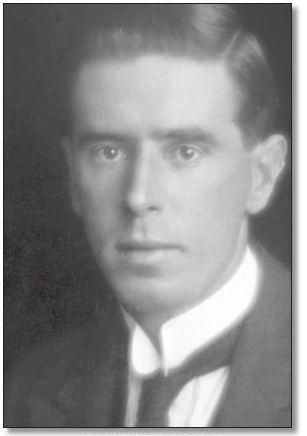
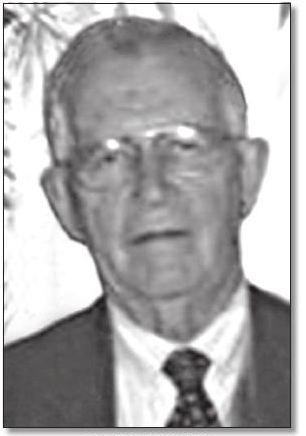
Dr Lewis put a lot of effort into the difficult task of running a blood bank. He had to use his own anaesthetic machine and diathermy in his early days in Kyogle. In 1938 he was reported as making an official complaint to the health department about a faulty drug supplied to his hospital causing significant reactions. He and Matron McKid worked in great co-operation for many years for the benefit of Kyogle Memorial Hospital, constantly putting pressure on the centrally run and funded Health Department to provide even basic improvements.
Dr Lewis was a respected member of the Methodist Church in the town. He died in Kyogle in 1962, just after the theatre complex was officially named after him.
James Aiken
In May 1932, James Aiken, LRCP, LRCS (Edin.), LFPS (Glasgow 1909) was in Kyogle, practising in Geneva Street and a Honorary Medical Officer at the hospital. He had been working in the Tweed area. Dr Aiken proved to be a man of high principles in October 1934 when, after a young girl patient of his complained to him about indecent behaviour towards her by her father, Dr Aiken took his stick and the law into his own hands and beat the guilty father about the head, so that the man had to have his scalp wounds sewn up by another doctor in town, Dr Doyle. The magistrate fined him only 10 shillings because the father had deserved it. Dr Aiken left at the end of 1935.
Percy H Doyle
Percy Hugh Doyle, MB (Sydney 1928), Resident Medical Officer and Registrar at Sydney Hospital in 1928–30, opened his practice in Kyogle Road in 1933. A Brewarrina boy, he had started GP work in Sydney in 1932. He succeeded Dr Jones and the year after he arrived, he was in the unusual situation of treating the man who had been battered about the head by his co-practitioner in town. Dr Doyle and Dr Lewis found provision of medical services very difficult during WWII with only two doctors in the town for five years and also a lack of nursing staff.
He remained for a long time, leaving Kyogle at the end of 1954 and going to Hornsby in Sydney to practise in obstetrics.
Arthur E Blythman
In late 1934, Arthur Ellis Blythman, LSA (Eng. 1907), took over Dr Aiken’s practice in Geneva Street. He was born in Yorkshire and was educated at Winchester College and Oxford, before graduating and holding surgical appointments at Charing Cross Hospital, London and working on the Orient liners. He went from Rockhampton to WWI, then to Narrandera, Sydney and Kyogle.
He was a prominent lodge member and was appointed to the honorary staff at Kyogle Hospital at which he was regarded as a skilful surgeon. Unfortunately, his chronic indifferent health resulted in his death in Kyogle in June 1936, at the age of fifty-four.
David R Reid
David Robertson Reid, MB, BS (Sydney 1935), Resident Medical Officer at RPAH, Camperdown in 1935–36, Senior Resident Medical Officer at Eastern Suburbs Hospital, Sydney in 1937, arrived in Kyogle in 1938 as one of the locums for Dr Lewis, when he went on a twelve-month trip to Europe. He stayed on with Dr Lewis for a while, then served in WWII from 1940–46 as major in the AAMC, being Mentioned in Despatches. On return to Kyogle, he set up his practice in Main Street. In 1961, Dr Reid became Honorary Hospital Medical Superintendent, a post he held until he left Kyogle in 1978 after forty-one years’ distinguished service to the area, which was recognised by his award of the MBE.
He had been very actively involved in the running of the hospital and education of the nurses, as well as spending a lot of time in the introduction of a satisfactory and specialist supervised radiological service. He retired to Grafton. Dr Reid started an era in Kyogle where two to three independent GPs practised in the town in a great spirit of co-operation, leading to expertise being shared in a very friendly professional environment, with the added benefit of their patients being able to get good treatment in their local hospital.
John E Binnie
At the end of 1954, John Everard Binnie, MB, BS (Queensland 1951), Resident Medical Officer at Brisbane General Hospital in 1952 and Nambour General Hospital in 1953, then Anaesthetic Registrar at BGH in 1954, took over the practice of Dr Doyle. Dr Binnie had served in the RAAF as a bomber pilot in WWII from 1941–45, being a POW and awarded the DFC, before starting medicine.
He wanted to opt out of the urban system and have a better life with his family, so he also spent time on his farm at Eden Creek. He was a welcome addition to the Honorary Medical Officer staff because of his particular interest and expertise in anaesthetics and also obstetrics. He took great interest in nurse education and was in practice in Kyogle until near the end of 1979, when he continued to live in the town, with an interest in orchid growing added to his long-time involvement with classical music and Latin.
Bagenal C Harvey
Bagenal Crosbie Harvey, MB, BS (Queensland 1942), Resident Medical Officer at Ipswich General Hospital in 1942–43, Medical Superintendent at St George District Hospital, Queensland, in 1943–45, Honorary Clinical Assistant Orthopaedic Surgeon at Mater Hospital, Brisbane 1947–61, took over the practice of his ailing father-in-law, Dr Lewis, at the beginning of 1962 and was appointed Honorary Medical Officer to the Kyogle Memorial Hospital. He was a captain in the RAAMC Reserves.
Dr Harvey was in practice for fourteen years and moved to Sydney. Known universally as ‘Bags’, he was very popular with his own patients and colleagues throughout the Richmond Valley region.
Brian K Perry
In January 1976, Brian Kinross Perry, MB, BS (Sydney 1962), FRACGP, took over the house and practice of Dr Harvey in Geneva Street. He had been a Resident Medical Officer at Parramatta District Hospital in 1962–63, Senior Resident Medical Officer at RGH, Concord and RAHC, Camperdown in 1964, worked as a suburban GP in Cronulla in 1965, then in general practice in Hillston in NSW. In 1974, after six months in psychiatry, he did more time in suburban Sydney practice. This led him to decide to return to country general practice with the wide medical spectrum available to rural doctors with appropriate training and dedication, and he became a Honorary Medical Officer at Kyogle Memorial Hospital.
In 1982 he continued tertiary education and became a student of philosophy, pure mathematics, ancient Greek and other languages, and was a keen attender of the symphony concerts. Dr Perry started up a farm on which he bred Percheron horses, which kept all members of the family busy and provided a great attraction for the locals. He was destined to become a long-term stayer in Kyogle.
Clive NJ Martin
Clive Norman Joseph Martin, MB, BS (Bombay 1958), MS (Bombay 1965), FRCS (Eng. 1969), started practising in Kyogle in 1978. He had trained in India and the UK and been a surgeon at Bombay Hospital from 1970–76 and then at Port Moresby General Hospital in Papua New Guinea in 1976–78 before he was attracted by an advertisement in the Australian Medical Journal about Kyogle. He did GP duties and continued his specialist surgery for at least ten years until financial restrictions on hospitals such as Kyogle led to progressive strangling of surgical services at the local hospital. Dr Martin was a keen family man, very interested in music and enjoyed club golf.
Vivekananda P Das
Also in 1978, Vivekananda Purushothama Das, known locally as ‘Peter’ Das, MB, BS (Colombo, Sri Lanka, 1965), MRCP (Glasgow 1975), started to practise in Kyogle. He had been an intern at Colombo General Hospital in 1965–66, Visiting Medical Officer at the District Hospital in Sri Lanka in 1966–67, Visiting Medical Officer at the District Hospital in Malaysia in 1967–71 and Resident Medical Officer at Lady Templer Hospital, Kuala Lumpur in 1972–77. He was a GP with special interest in obstetrics.
Charles A Wood
Charles Alexander Wood, MB, BS (Sydney 1964), Resident Medical Officer at Wagga Base Hospital in 1964–65, Resident Medical Officer at Prince Henry Hospital, Sydney in 1965, then Honorary Medical Officer in Jerilderie, NSW in 1966–71 and Visiting Medical Officer at Young District Hospital until 1979, took over Dr Binnie’s practice in Main Street in late 1979. He was a GP with special experience in obstetrics and anaesthetics.