Nimbin
First the cedar loggers moved into the Nimbin area, thirty kilometres north of Lismore, in the 1840s and then settlement proper began from 1903.
Arthur M Aspinall
Arthur Martel Aspinall, MB (Sydney 1911), ChM (Syd 1913), started a general practice in May 1915, in what the press referred to as the thriving town of Nimbin. He was born in Forbes in 1885 and in 1911 was Resident Medical Officer, then in 1912 the Resident Skiagrapher and Pathologist at Sydney Hospital. After two years in the UK and two more in Sydney, he arrived in the town and was described as a bachelor, short in stature and quietly efficient. The townspeople had been trying to get a resident doctor for four years and had managed to arrange a government subsidy and a guarantee from the Nimbin Farmers and Settlers Association.
Unfortunately, he had to leave after a year to serve as captain in the RAAMC at the Base Hospital in Randwick and then in the Middle East. After the war, he started practising in Lismore.
Hugh AC Wall
At the end of 1921, Hugh Alton Chandos Wall, MB, BS (Sydney 1915), was in Nimbin. Born in Glebe, he had been a lieutenant in the RAMC in 1915 and temporary surgeon in the RAN in 1917. He had been a Resident Medical Officer at St Vincent’s Hospital in Sydney in 1917, and was a GP in Mortlake until the end of 1921. Dr Wall seemed to have an attachment to the Education Department to do medical visits to schools, including Coraki and Nimbin, where he set up a little private hospital in his house and practised until early 1924. He went to Coraki for the next thirty years.
Austin A Callen
Austin Arthur Callen, MB, ChM (Sydney 1922), was practising in Nimbin in 1924. He was mentioned in the local press for his sporting prowess, playing cricket and proving to be a prolific run-scorer in local representative matches, playing in the local rugby league team, even going in for novice wood-chopping events and scaring the locals by starting off scratch in 100-yard footraces. In the middle of 1925—perhaps he was worn out—he heeded the call to practise in Sydney, and sold to Dr Egan.
Edward C Egan
In May 1925, Edward Charles Egan, MB, ChM (Sydney 1924), arrived in Nimbin. He settled into village life and was soon elected vice-president of the Parents & Citizens Association, the cricket club and football club. In June 1927, he sold the practice and went to Sydney, where he found his way into psychiatry.
Alexander Leiper
Alexander Leiper, MB, ChB (Glasgow 1925), started in Nimbin in 1927, after Dr Egan. He applied to be on the Visiting Medical Staff of Lismore Base Hospital and was probably not successful. He left in March 1928, with the aim of practising in Sydney, later working as surgeon on the P&O steamships.
Robert W Schuch
In April 1928, Robert William Schuch, LRCP&S (Edin.), LRFPS (Glasgow 1926) succeeded Dr Leiper. He had served in WWI and may have been in indifferent health as he left in November 1930 for Chatswood and he died in Katoomba in 1939.
George A Chambers
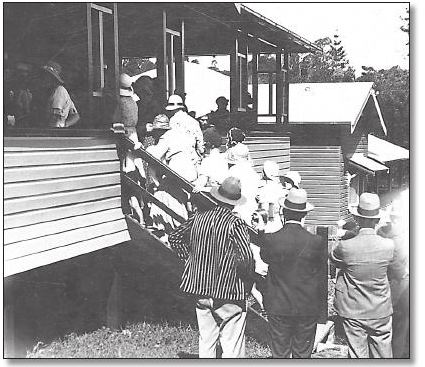
George Alexander Chambers, MB, ChM (Sydney 1925), started in the town in November 1930. He had come from the small town of Penong in South Australia. Typically, the doctor found himself in great demand for lots of committees. In particular, he was a strong supporter of the golf club, his church, the A&I Society and horticultural society. Dr Chambers also lent his support to the effort to build a hospital in Nimbin, which opened in 1933, under the control of the Country Women’s Association for quite some time. He left in May 1934, with a view to ‘advancement of his career’ by moving to Eastwood in Sydney.
Edwin SA Meyers
In 1934, Edwin Solomon Alexander Meyers, MB, BS (Sydney 1934) went to Nimbin and practised as a GP. Born in Sydney, he was a very keen bowler and his time on the committees of the bowling club and the A&I Society for about two years were a prelude to his going back to Sydney to start a career with the Health Department in which he rose to become State Director of Health.
Arthur E Malaher
Arthur Ernest Malaher, LMSSA (Eng. 1901), FRIPH, was a GP in Nimbin in July 1936. He was born in Shetnil, England, in 1873 and from 1904 had been in Queensland, working in Nambour, Dayboro and Cleveland. He was active in the tennis club, the School of Arts and library and was the Honorary Medical Officer to the A&I Society. In March 1939, he was practising in Bonalbo.
Leonore E Jakins
In 1940, Leonore Edith Jakins, MB, BS (Sydney 1936), was in Nimbin. She had been in rural practice south of Sydney and was married to William Barton Jakins, MB, BS (Sydney 1935), who had been a Resident Medical Officer at Wagga Base Hospital in 1937. It seems that Dr Leonore Jakins ran the practice in Nimbin and she was very popular with the residents who entrusted her with long-term appointments as judge at the flower shows and the more hazardous judge at the baby shows. She gave regular first aid lectures and served Nimbin for the relatively long time of ten years before the death of her husband in April 1949 led to her being given a farewell by the locals and going to Sydney in June 1949.
Joyce I Russell
Joyce Ingram Russell, MB, BS (Sydney 1944), was appointed in April 1949 to the Nimbin Memorial Hospital (which now existed but with no X-ray facilities) and conducted a vaccination campaign prior to Dr LE Jakins’ departure. Dr Russell was accorded the honour of having Dr Kellas fill in for her when she had to go away for a time. Dr Russell followed the pattern of the Nimbin doctors paying particular attention to the health of the schoolchildren. She left in April 1951, aiming to go to Lithgow in NSW.
Ruth I Godden
In October 1951, Ruth Irene Godden, MB, BS (Sydney 1946), took over from Dr Russell. She had done a locum at the practice for seven months the previous year. Dr Godden held regular first aid classes open to anyone in the town. She was still there in October 1954 but by 1957, she was in Cronulla.
Endel Kroll
The next doctor in Nimbin was the very interesting personality, Endel Kroll, an Estonian-born overseas medical graduate (MD Tartu 1943) who had found his way to Kyogle in the early 1950s. He told of having had his introduction to blood and gore as a Medical Officer pressed into service with the German Army right at the Russian front in WWII, finding himself in a dodgy situation with his previous neighbours.
His English was poor but the kind doctors in Kyogle found him a job for four years as wardsman at the hospital, where he was a real treasure, having medical knowledge, working very hard and being the unofficial radiographer. He endeared himself to the locals who taught him to speak English well and unselfishly helped him on the path to become qualified by working under supervision at Lismore Base Hospital, then as a Resident Medical Officer from 1958 to 1962.
After he became registered, Dr Kroll went to fill the medical void in Nimbin in 1962. He was very well liked by the locals as a hard-working doctor despite having bouts of illness and physical infirmity, but he was also on very good terms with his colleagues in Lismore. This warming story came to an end when he died still working in Nimbin in August 1970.
Jan J Saavr
In 1974, Jan Jerzy Saavr, MD (Marburg, Germany 1948), Dip Pub Health (Edin. 1958), DTM&H (Liverpool 1958), was in general practice in Nimbin. He had been a Resident Medical Officer at the University of Marburg Teaching Hospital in 1948–49 and embarked on a career based on public health with particular interest in parasitology, which may have led to humorous comments about why he chose Nimbin, after working in Papua New Guinea with the government. Actually, he had met Dr RW Gordon in PNG and was told of the delights of the Far North Coast.
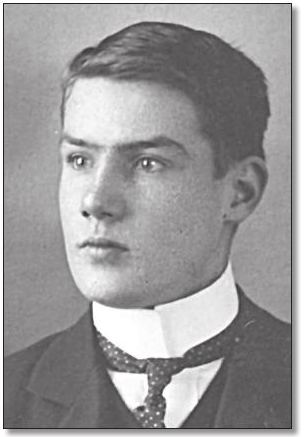
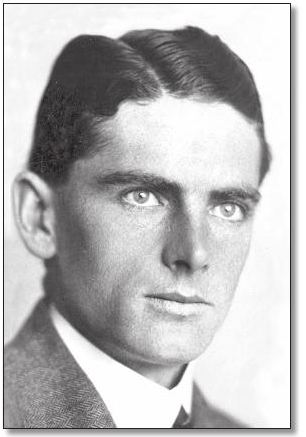
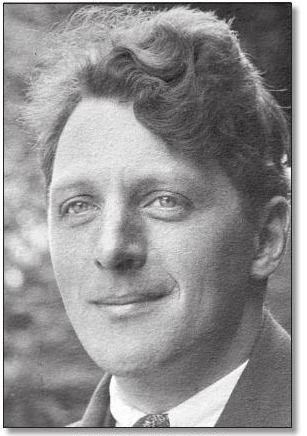
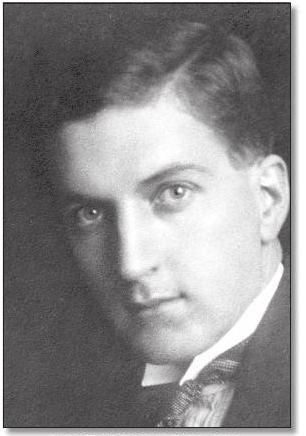
Dr Saavr worked in the town and enjoyed living a rural lifestyle for about four years, then resumed his association with the PNG and Australian governments.
David A Helliwell
David Andrew Helliwell, MB, BS (Eng. 1976), set up his GP practice in 1981. Before his arrival, short-term periods of cover or rotations to the town were arranged. Born in Kuala Lumpur to English parents, Dr Helliwell had been a House Officer at St Mary’s Hospital in Portsmouth, England, in 1977–78 and then Royal Hampshire County Hospital in Winchester in 1979–80. He left the beautiful south of England countryside to try rural practice in Finley in the NSW Riverina in 1980–81, attracted to Australia by a chance short visit on family duty.
The usual ad in the Medical Journal attracted him and he started at the hospital and in his own rooms in the ‘CBD’. He had to start from scratch and get an ECG machine and resuscitation equipment at the hospital, although there were no X-ray facilities in the town. Nimbin had been developing problems with ‘substance abuse’ and Dr Helliwell had become unreasonably busy by 1985 when he was joined by Dr KR Pearson in the practice. They were confronted with a serious incidence of hepatitis B and were responsible for the introduction of the first free needle exchange program in rural NSW in about 1985, when Dr Helliwell was able to find time to complete his home on his farmlet retreat, after some years of ‘living behind the shop’ in the centre of town.
Kingsley R Pearson
In 1985, Kingsley Robert Pearson, MB, BS (NSW 1980), joined Dr Helliwell in the Nimbin practice. They had met at a social gathering and Dr Pearson liked the idea of moving to Nimbin. He was born in Sydney, did his residency at Hornsby District Hospital in Sydney in 1980–81 and got obstetrics experience as Senior House Officer at West Suffolk Hospital in Bury St Edmunds, England in 1982. Then he worked as a locum GP in Singleton and Brisbane in 1983, following which he was with the Royal Flying Doctor Service at Broken Hill for the first half of 1984.
He set up his small farm outside Nimbin and, despite the busy practice, he made time to take part in the A&I Society, karate and community gatherings.