Mullumbimby
Settlement of Mullumbimby was under way in the late 1870s but in 1894, the rail line reached Mullumbimby from the south and changed its status from a small town with easy access only from the previously more populated seaport of Brunswick Heads to being the larger town. The medical services reflected the population and there were no recorded practising doctors resident before 1904.
Delph Singh
Mr Delph Singh was reported in the local paper as living and practising in the town in 1901 but he was the subject of prosecutions for calling himself ‘doctor’ while unregistered under the Medical Practitioners Amended Act, advertising as being experienced especially in the treatment of ‘incurable diseases’. He was, therefore, an Indian herbalist and he worked from Grafton to Murwillumbah, including Magellan Lane in Lismore, and had a house in Mullumbimby which he rented to Dr Kesteven just before it was burnt down in October 1904. Then Mr Singh went to Queanbeyan to continue his herbal career.
Leighton Kesteven
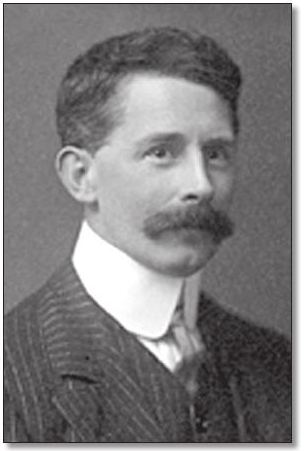
Leighton Kesteven, MRCS, MRCP (Eng.) started practice in Mullumbimby in September 1904, having the misfortune of losing most of his possessions in a mysterious fire within months of his arrival as the first registered doctor resident in the town. He was born in London in 1852, the son of a doctor, with whom he did an apprenticeship before training at St Bartholomew’s Hospital and working in Macclesfield and Derby Asylums. He became Government Medical Officer and Deputy Magistrate in Fiji in 1881 and Brisbane as Medical Superintendent, Superintendent Brisbane General Hospital 1887, then a surgeon in Sydney from 1891, but reports indicate that efforts to engage in private rooms and a hospital failed financially so he took to the road.
After working as Medical Officer at Bourke Hospital from the late 1890s, Dr Kesteven set up rooms briefly in Lismore, in January 1904 at ‘Riverview House’ on the corner of Molesworth and Zadoc Streets. He then moved to Mullumbimby, in a house in Jubilee Avenue.
In his four years there, he engaged in community affairs including being president of the Progress Association, forming of a branch of the Australian Light Horse and being a JP involved in court work, in which he had a lot of experience, not only as an official, but as a plaintiff and defendant. He was an avid contributor to the newspapers and medical journals about political and medical issues—one to the British Medical Journal while at Mullumbimby regarding the causes of eczema. By September 1908 he had left Mullumbimby to practise in Randwick. He got severe appendicitis in 1924 and died soon after. (He had a son who practised from Bulahdelah, on the lower North Coast).
William Connor
Towards the end of 1904, William Connor, MB BS (Edin. 1896), started visiting from Byron Bay on a weekly basis, apparently not for long.
Francis G Connor
Francis Gillies Connor, MB, ChM (Edin. 1883), MD (Edin. 1895), arrived in Mullumbimby at the beginning of 1906. He was born in 1861 at Swan Creek, on the Clarence. He started on the Far North Coast in Coraki in 1886 and moved to Lismore in 1890. He started to run his Mullumbimby practice as a physician and surgeon from a house in Stuart Street, opposite the Anglican Church. He was feeling the effects of his many years in very busy all-round practice and went to Mullumbimby to ‘help out’ but, true to his nature, he stayed for three years and in January 1909 sold his practice to Dr James Reiach.
Dr Connor had completed a very distinguished career in which he performed successfully extraordinary operative feats and was one of the most experienced and respected medical practitioners on the North Coast. He retained a rational and objective attitude towards unregistered ‘medical men’, unlike some of his more vocal colleagues. After retiring to a farm in Tamworth for a while, he died in Sydney in 1921, aged sixty.
James Reiach
In January 1909, James Reiach, MB, MS (Edin. 1893), born in Greenock, Scotland in 1869, started to practise in Mullumbimby. After practising in Sydney, lecturing to the St John Ambulance Society and then in Molong, NSW for five years, he took over the practice of Dr Connor in Stuart Street and attended maternity and other ‘non-infected’ patients at the small general hospital in Gordon Street. He left in August 1912, succeeded by Dr Ward and went to Sydney, enlisting in the AAMC as captain in September 1914 and serving overseas, before becoming a career Medical Officer in the Army.
Duncan D Gibson
Duncan David Gibson, MB, ChM (Sydney 1906), started as the fourth solo GP in Mullumbimby in 1909, at the age of twenty-nine. He was born on the Manning River and had worked around Windsor in NSW, and did locum tenens work in Lismore in 1908, when the medical politics there were in some degree of turmoil, so he opted for the quieter, but probably far busier, Mullumbimby. He was to practise for almost fifty years in Mullumbimby and was revered as ‘The Doc’ or ‘DD’. Dr Gibson treated patients in the Gordon Street hospital until 1916 when it closed and he attended the ‘Mullumbimby Private Hospital’—a house in Dalley Street.
He changed his smart sulky and pony to the first motor car in town and was very active in the community, in particular, with the Brunswick Heads Surf Club, the golf club and tennis club. He worked in very friendly co-operation with the next doctor in the town, Dr Ward. Such was his dedication to his patients that in 1917 he postponed his own wedding service to deliver twins in a difficult labour.
Particularly during the Depression in the early 1930s, Dr Gibson often accepted payment in kind for his services with dairy foods, other farm produce and trade work. In 1924, he started living in the beautiful house ‘Cedarholm’ and became an avid horticulturist, with his own glasshouse and its exotic orchids, ferns and dahlias.
In 1948, he took over the Mullumbimby Private Hospital in Dalley Street. He outlasted many doctors, ‘retiring ‘ in 1957, nine years after his son, Lloyd, joined him in practice, although he did see a few patients in Brunswick Heads until he became ill in 1962 and died in Mullumbimby Hospital in 1965.
John Ward
In September, 1912, John Ward, MB, ChB (Melbourne 1907), followed on from Dr Reiach in the busy practice. After his residency, he was the Medical Superintendent at Richmond and Croydon Hospitals in Queensland. On one occasion he was reported in the national news for his efforts in attending a sailor after a serious incident on the ill-fated SS Wollongbar. He was also very involved in community activities, including formation of the Mullumbimby Ambulance Brigade, running first aid classes and membership of the surf and cricket clubs and the local Progress Association. At the end of 1916, he was Medical Officer at Ennogera Military Hospital before resuming in Mullumbimby.
In the severe epidemic in 1919, Dr Ward and his wife were stricken with the pneumonic flu and he did not recover, dying in June, aged thirty-one—a very sad occasion for Dr Gibson who was trying to manage the local very severe epidemic and also lost his good colleague whose practice was kept open for a time by Dr William Wells Greer, MB BS (Edin. 1904), MD (Edin. 1906), who had been previously in Kyogle.
Arthur Cole
Arthur Cole, MRCS, LRCP (Eng. 1903), started in Mullumbimby in February 1914. He had been a student at St Mary’s Hospital, London, then Resident Medical Officer at Mildmay Hospital, Assistant Medical Officer at Royal London Ophthalmic Hospital and Clinical Assistant in the Dermatology and Throat Department at St Mary’s before he came to Australia. He started on the Far North Coast at Woodburn, acting as short-term locum for Dr S Monti, before running a general practice in town on the corner of Dalley and Tyagarah Street for the Friendly Societies until June 1915.
Dr Cole was given an emotional farewell at the Court House Hotel and revealed that he was leaving mainly to go to the aid of the Serbians who were at war and, because he loved hospital work, he had to offer his services.
Francis Quirk
In 1919, Francis Quirk, LRCP&S (Edin.), LFPS (Glasgow 1911), came to take over the practice of the late Dr Ward. He had been a captain in the AAMC Reserve. Dr Quirk was responsible in 1921 for outfitting with a modern operating theatre the private hospital, later called Kurraba Private Hospital, which eventually became the Mullumbimby and District Hospital. He left in 1921, heading to Sydney.
Archie S Cockburn/Coburn
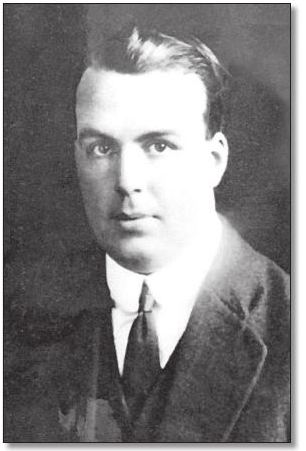
Archie Sheridan Cockburn, MB, ChM (Sydney 1916), Resident Medical Officer Lewisham Hospital, Sydney in 1919, took over the Stuart Street practice from Dr Quirk in 1921. Born in 1892 in Bowral, he enlisted in the AAMC in July 1916 and went as Medical Officer with the 6th Battalion for three years, being awarded the Military Cross in France for conspicuous bravery when he stayed at his RAP after being severely gassed to the point of his eyesight being affected and leaving him with permanent effects.
In Mullumbimby he went under the name of Coburn and became very involved in the community, including the parish council, lodge, the RSL, agricultural society, P&C Association, and bowls, from where in 1930 he was called to a motor cycle accident at Billinudgel and reported in the papers as picking up the injured rider and rushing him back to hospital in his own car.
Dr Coburn was very busy until 1942, when he was seriously ill after a major operation and complications. However, such was the spirit of the man that he continued in the practice with help from various locum doctors— including in 1942, John Charles Lane, MB, BS (Sydney 1941)—for another two years until he died in Mullumbimby in June 1944, aged fifty-one.
Thomas F Tonkin
In 1944, Thomas Francis Tonkin, who won a university exhibition to graduate MB, BS (Sydney 1931), Dip Trop Med (1935), Resident Medical Officer at Sydney Hospital in 1931–32, took over Dr Coburn’s practice in Stuart Street and worked in the town until he died in 1948, leaving the Gibson practice on its own for about a year.
Lloyd C Gibson
Lloyd Cameron Gibson, MB, BS (Sydney 1943), Resident Medical Officer at Wollongong Hospital, came in 1949 to practise with his father in Mullumbimby, where he had been born in 1919. This made Lloyd the first child born in the town to study medicine and a second-generation North Coast doctor. The Gibsons started the first medical partnership in Mullumbimby. When his father retired in 1957, Dr Lloyd Gibson moved to Dr Alderman’s practice and eventually left for Hurstville, Sydney in 1959.
Bruce A Frith
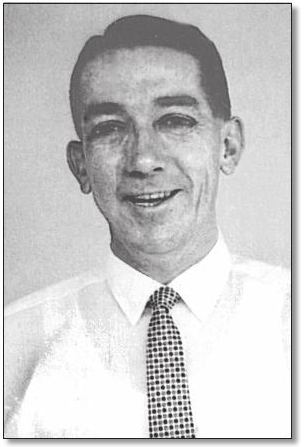
Also in 1949, Bruce Austin Frith, MB, BS (Sydney 1946), Resident Medical Officer at Sydney Hospital in 1946–47, Lecturer in Anatomy (Uni. Queensland 1948), took over Dr Tonkin’s practice, but built a two-storey surgery and residence in Stuart Street (later to become the Mullumbimby Medical Centre). In February 1950, he was reported in the national press after wading from 10.00 pm across the flooded creek at Main Arm by holding onto a 60-foot rope held by two men and reaching a farmhouse at 4.45 am to deliver a baby, then returning by the same route to town fourteen hours after he set out. Dr Frith had to handle polio and diphtheria outbreaks, and showed great flair by doing his own clinical pathology.
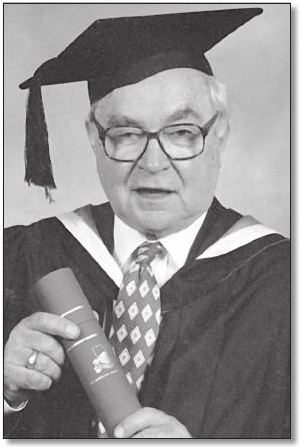
His outside interests were tennis, golf and fishing. He had left by 1954 to go to England for further training and obtained his MRCP, before becoming a Specialist Physician in Lismore.
Lawrence W Alderman
Lawrence William Alderman, MB, BS (Hons, QLD 1944), FRACGP, took over Dr Frith’s practice in Stuart Street in 1954. Born in Hobart in 1920, he acquired a vast experience in rural medicine, having worked in hospitals in Queensland and the Northern Territory and with the Flying Doctor Service in Alice Springs and Broken Hill, before going to Darwin.
In Mullumbimby, he was joined by Dr Lloyd Gibson in 1957 for two years. Dr Alderman was busy in his general practice, doing anaesthetics and obstetrics, was Government Medical Officer for many years and still found time to help found the Pacific Players Drama Group in 1956, go to Rotary, serve as deputy mayor of the municipality for six years and spend time in his pottery kiln. From about 1960, he also had a branch surgery in Brunswick Heads.
Dr Alderman was always ready to help out his colleagues in neighbouring towns and gave a lot of recent graduates a good grounding in general and rural medicine in his practice. One of these doctors was Dr Ian Ralph Curley, MB BS (Sydney 1966), who worked in the practice in 1969 and developed his interest in surgery before going to England to train, later practising in Byron Bay.
Thereafter Dr Alderman ran his rooms with a series of assistants, including in 1971, Harry House, MB (Sydney 1974). He went into semi-retirement in 1972, concentrating on Brunswick Heads and was able to spend more time on his drama and pottery pursuits. ‘Semi-retirement’ also included being Medical Superintendent of the Mullumbimby and Byron District Hospitals for some years.
Harry T Goodman
In 1954, Harry Thomas Goodman, MB, BS (Sydney 1949), Resident Medical Officer at St Vincent’s Hospital, Darlinghurst in 1949, was in town. He had been previously in Tullamore, NSW. Dr Goodman was a Repat LMO and the Government Medical Officer, in Stuart Street for at least three years.
Ronald L Thomson
Ronald Leslie Thomson, MB, BS (QLD 1956), Resident Medical Officer at Brisbane General Hospital in 1957, started up in January 1958 with Dr Alderman and Dr Lloyd Gibson in the Mullumbimby Clinic as a GP and surgeon, operating at the twenty-bed private hospital. He was a family man who worked very hard and had little time for organised recreations. Dr Thomson went to Seven Hills, Sydney in June 1961 to further his interest in surgery.
Keith R Barnes
In 1960 Keith Reginald Barnes, MB, BS (QLD 1952), joined Dr Alderman. He did his residency at Brisbane General Hospital in 1953–55, then trained at Royal Women’s Hospital in 1956 and 1957 before going to the UK and obtaining his MRCOG (Eng. 1959).
Dr Barnes visited Mullumbimby with his wife straight after coming back to Australia to see her sister, and Dr Alderman knocked on the door to seek surgical help for his son with appendicitis and after operating on him, Dr Barnes stayed eight years in the town. He practised in the town as a GP with special expertise in obstetrics and gynaecology. He went to Canberra in 1968 and specialised in obstetrics and gynaecology and became an esteemed Fellow of the Royal Australian and New Zealand College of Obstetricians and Gynaecologists. Among his outside interests were Apex, cooking, Australian and Pacific map collecting and tertiary study.
David J Stephen
David Johnston Stephen, MB, ChB (NZ 1950), DPH (Eng. 1959), practised from 1965 with Dr Alderman for some years and then after working with Dr Miller, went out on his own, building a medical centre in Dalley Street. He was an experienced GP also with expertise in anaesthetics. In his early days in the town, he had his own X-ray machine in his rooms. Dr Stephen liked to spend recreational time on his farm on Mullumbimby Creek. He opened a branch practice in Brunswick Heads next to the hotel until 1979.
Peter JA Rich
In 1973, Peter James Angus Rich, MB BS (QLD 1970), bought the old Gibson practice in Burringbar Street. He was there in general practice for about two years before leaving for Brisbane
Madhukar Wable
Madhukar Wable, MB, BS, MRCP (Eng.), took over from Dr Rich in 1975. He was born in India and after his training in England, he was on sabbatical from India and spent time doing rural general practice in Hay, Parkes and over one year in Mullumbimby.
Surendranath Rananavare/Suresh
In January 1976, Surendranath Rananavare, always known as Dr Suresh, MB, BS (Bombay 1967), Dip Hyp, Dip Acu, set up in solo practice after Dr Wable on the site of the original Gibson practice. After five years working in several disciplines in Bombay, he had arrived impecunious in Australia in 1971 and began Senior Resident Medical Officer posts at Newcastle Royal and Mater Hospitals for four years. He was a bachelor who liked to drive a fast sports car. Dr Suresh had a solo general practice with obstetrics, GP surgery, anaesthetics and medicine which included hypnosis, acupuncture, nutrition and musculoskeletal fields.
He had a vast library of various medical disciplines and was a follower of ayurvedic medical principles. He retained his interest in surgery as a regular assistant at major operations. He was also notable for having his own X-ray machine when he started in his rooms. Dr Suresh was very interested in postgraduate education and also found time for golf, meditation and regular running, which led to his participation in the popular annual Mount Chincogan Charge, long distance many times. He was involved in local charity groups, particularly the Flying Doctor Service and was still practising in 1987.
David D Miller
David Douglas Miller, MB, BS (Sydney 1971), Resident Medical Officer Mater Hospital, Newcastle 1971–72, DA (Eng. 1972), DObst RCOG (Eng. 1974), began in Dr Stephen’s practice in 1976. He was the son of the eminent Sydney neurosurgeon, Sir Douglas Miller, who actually had operated on a patient in Kyogle Hospital years before. Dr David Miller had been a Resident Medical Officer and Registrar at Whipps Cross Hospital, London in 1972–74 and Registrar at Western Suburbs Hospital, Newcastle, NSW, in 1975.
In 1976, he was joined by Dr M Pelmore in the rooms adapted from the old town clerk’s building in Dalley Street. Dr Miller was very interested in obstetrics and became a strong advocate and skilled exponent of home birthing, which made him very popular in the Mullumbimby region. He had a strong interest in ocean sailing and built his own yacht in his yard at home and sailed northwards, working in Cairns from 1980 to 1983, before returning to practise in Mullumbimby.
Michael H Pelmore
In 1976, Michael Hugh Pelmore, MB, BS (Eng. 1971), went to Mullumbimby to do a short-term locum and did not leave. Born in England with an anaesthetist father, he graduated from St Thomas’ Hospital in London, and after his residency there in 1971–72, worked at St Helier Hospital, Jersey in 1972, was Senior House Officer at Bath Royal United Hospital for his DA (1973) and completed the DObst RCOG (Lond 1975).
He came to Australia overland via Nepal, working in a hospital in Kathmandu. He then did locums around the Hawkesbury before settling in Mullumbimby and practising with Dr D Miller in the old town clerk’s building in Dalley Street. In 1980, Dr Pelmore took over on his own until Dr G Taylor joined him in late 1980 to begin a practice across the road. In 1987, they moved down the street to start the Meadows Medical Centre.
He was very busy with general practice, as well as doing obstetrics and anaesthetics at Mullumbimby and Byron Bay, but found enough energy to sing and play guitar in groups around the area, go surfing and sea kayaking, cycle and do photography.
Alastair W Swanton
Alastair William Swanton, MB, BS (Sydney 1956), FRCS (Edin. 1961), FRCS (Eng. 1962), FRACS (1965), arrived in Mullumbimby in 1976 as the town’s first specialist. He had done his residency at Royal North Shore Hospital (1956-1957), before heading off to the UK in 1958 for surgical study in Edinburgh and training in London in the East Ham Hospital group for eighteen months and in Hampshire in the Winchester Group in 1960–1962.
Back home, he started up in Consultant General Surgical practice at Wollongong from 1962 to 1976, after which he brought his surgical expertise to Mullumbimby and Byron Bay, notably working without Resident Medical Officer support in the hospitals. In his very spare time he recaptured his surfing expertise and also became a prominent windsurfer just across the road from his house.
Giles C Taylor
In 1980, Giles Crispin Taylor, MRCS, LRCP (Eng. 1971), arrived in the town. His mother was a GP, and he graduated from Guy’s Hospital, London. Then he did residencies at Royal Surrey County Hospital, Guildford and St Helen’s Hospital, Hastings, England before spending two years in Africa and then qualifying for the DRCOG (Eng.) back in Guildford.
He came to Australia after working in the Solomons in 1979 and reunited with his old friend from student days, Dr Pelmore, in the Dalley Street family practice as a GP with special interest in obstetrics and aviation medicine. His recreations included family activities, surfing and regular golf. Dr Taylor seems to be the only doctor in the study to be a qualified glider pilot and started a long association with the local flying club.
Ian B Kingston
Also in 1980, Ian Bramwell Kingston, MB, BS (Sydney 1970), started working as an Assistant in the Dalley Street practice. He had been a Junior Resident Medical Officer at Royal Newcastle Hospital in 1970, Medical Officer in Royal Australian Navy in 1971–72, Surgical Registrar at Balmoral Naval Hospital in 1973, Fleet Surgeon in the RAN in 1974 and worked as a Surgical Registrar at the Royal Marston Hospital in London in 1976. Dr Kingston became very involved in civic affairs in the area.
Robert S Adam
Robert Shedden Adam, MB, BS (QLD 1965), took over Dr Stephen’s practice in Dalley Street in 1981. He was a Resident Medical Officer at Princess Alexandra Hospital, Brisbane (1966–67), followed by Surgical Registrar at Ipswich General Hospital in 1968, Toowoomba General in 1970 and Royal Perth in 1972–73 before running his own general practice in the town.
Peter G Bowles
Peter Gordon Bowles, MB, BS (Sydney 1978), joined the Meadows Clinic in 1986. He did his residency at RNSH in 1978, then worked at Gosford Hospital in 1979–1981 and in general practice in Gloucester on the North Coast for four years. Dr Bowles was a GP with expertise in anaesthetics and had spent six months in Brunswick Heads in Dr Holmes’ practice before he moved to Mullumbimby.